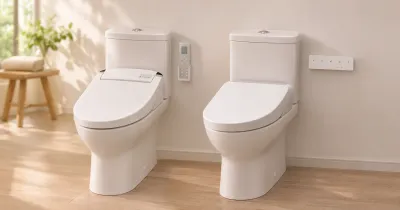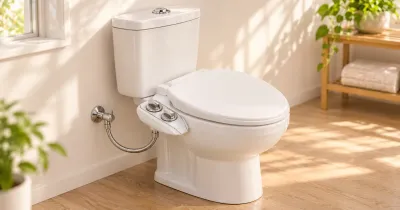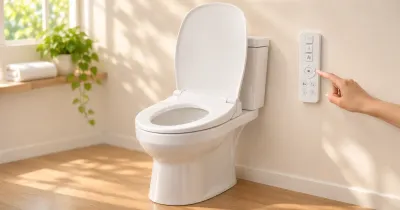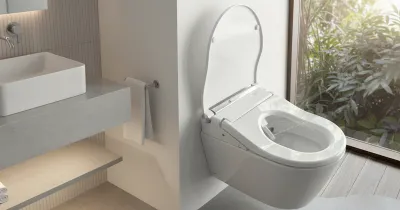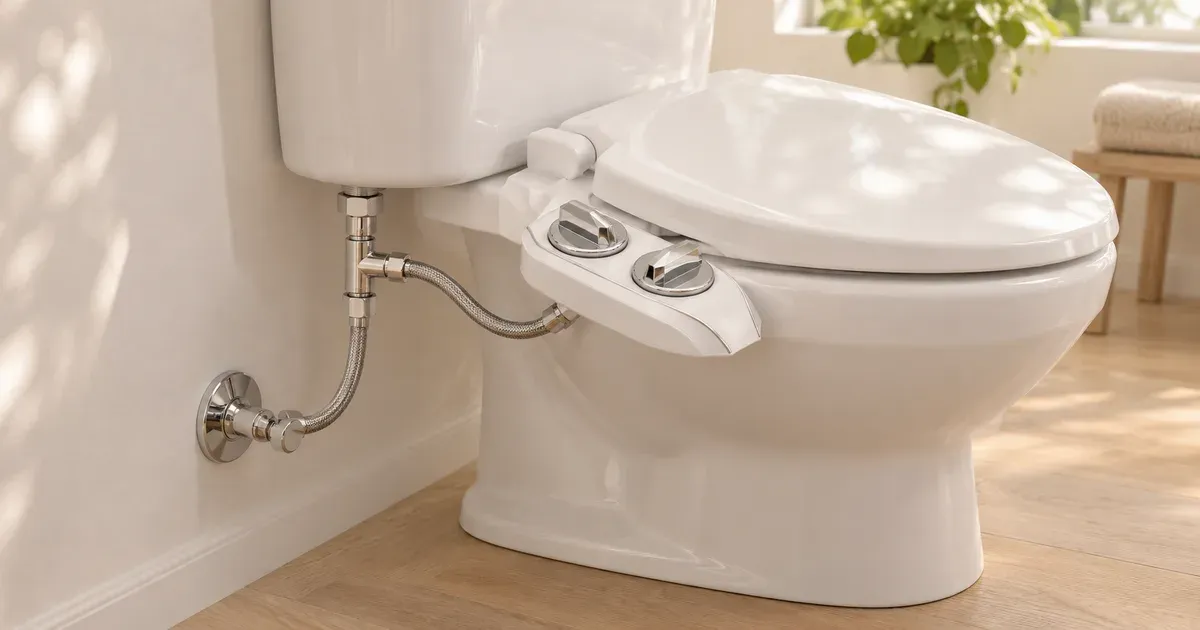
The short answer: bidets are legal in every US state, but the plumbing codes require bidet seats and attachments to meet one standard: ASME A112.4.2/CSA B45.16. That standard covers backflow protection, so toilet water can’t be pulled back into your drinking-water line. It also requires an automatic shutoff if heated water reaches 118 °F. A bidet that meets it doesn’t need a separate backflow preventer. The risk is uncertified attachments, which may lack that protection. Check the box or manual for the standard before you buy.
What the Codes Require
| Rule | What it says | Where |
|---|---|---|
| ASME A112.4.2/CSA B45.16 (2021 edition, replacing 2015) | The product standard for “personal hygiene devices for water closets”: bidet seats and attachments. It covers materials, backflow prevention, self-cleaning sprayer tests and a temperature safety device | ANSI webstore |
| Backflow test in that standard | Products not marked with a critical level need an atmospheric vacuum breaker at least 1 in (25 mm) above the toilet’s flood-level rim | PHCP Pros summary |
| Heated water | An automatic shutoff at 118 °F (48 °C) | Same |
| Durability | Front sprayers are tested to 50,000 cycles and rear sprayers to 25,000 | Same |
| Uniform Plumbing Code (California Plumbing Code 2025, §411.4) | “Water closets with integral personal hygiene devices shall comply with ASME A112.4.2/CSA B45.16” | CA Plumbing Code §411.4 |
| UPC backflow rule for bidets (§410.2) | A bidet’s water supply must be protected by an air gap or an approved backflow device | CA Plumbing Code §410.2 |
| UPC water temperature for bidets (§410.3) | Hot water to a bidet is limited to 110 °F (43 °C). The rule is written for bidet fixtures | Minnesota Plumbing Code 4714.0410 |
| International Plumbing Code (2024) | References A112.4.2-2021/CSA B45.16-2021 for water-closet personal hygiene devices. New York City’s code (§424.9) has the same requirement | NYC Plumbing Code |
| Electric seats | Listed under UL 1431. NEC 210.8(A)(1) requires GFCI protection on every bathroom receptacle | NEC 210.8 summary |
Between them, the UPC and IPC cover nearly every US jurisdiction. That’s why no state bans bidets: the codes regulate the product, not whether you can have one.
Does a Bidet Need a Backflow Preventer?
Not a separate one, if the bidet is certified to ASME A112.4.2/CSA B45.16. The protection is built in. Seats and attachments use a vacuum breaker or another approved device in the water path so that a drop in supply pressure can’t siphon bowl water back up the hose. That’s what the UPC’s §410.2 asks for.
You’d need to think about it only in two cases:
- An uncertified attachment with no stated backflow protection. Replace it with a certified one rather than adding parts.
- A non-electric warm-water model that also connects to the sink’s hot line. Follow the maker’s instructions exactly, and use the parts that came in the box.
Outside the US the rules can be stricter. Australia’s consumer regulator warned in April 2020 that DIY bidet installs without backflow protection could contaminate drinking water, and said Australian law requires a licensed plumber.
Are Cheap Bidet Attachments Safe?
Most are fine for the person using them. The risks are a leak and, if uncertified, backflow into the water supply. Here’s what to check:
| Check | What to look for |
|---|---|
| Certification | “ASME A112.4.2/CSA B45.16” in the listing or manual, often with a listing mark such as cUPC or CSA |
| T-valve material | Metal or stainless rather than plastic. Brondell’s FreshSpa Thinline and SimpleSpa, LUXE’s NEO line and TUSHY’s Classic 4.0 use metal T-adapters |
| Hose | Braided stainless supply hose |
| Shutoff valve | Your toilet’s existing shutoff should turn freely before you start |
| Warranty | At least 1 year; LUXE gives 18 months on NEO attachments |
A cracked plastic T-valve is the usual cause of a flood behind the toilet. Check every connection right after installing and again a few days later. See bidet recalls and electrical safety for the leak complaints on record, and best bidet attachments for metal-fitting picks.
Do You Need a Plumber or Electrician?
- Plumbing: most seats and attachments are DIY. They screw onto the toilet’s fill valve with a T-adapter. A plumber helps if the shutoff valve is stuck or the supply line is unusual.
- Electrical: electric seats need a grounded GFCI outlet within reach of a 3.5 to 4 ft cord. If you don’t have one, adding an outlet is an electrician’s job, and Kohler asks for a dedicated circuit. See how much electricity a bidet seat uses.
- Fit: measure before you buy. See will a bidet fit my toilet?
Bidet Plumbing Code FAQ
Are bidets legal in all states?
Yes. US plumbing codes (the UPC and IPC) allow bidet seats and attachments as long as they meet ASME A112.4.2/CSA B45.16. No state bans them.
Does a bidet need a backflow preventer?
A certified bidet seat or attachment has backflow protection built in: the standard requires an atmospheric vacuum breaker at least 1 inch above the flood-level rim, unless the product is marked with a critical level. You don’t need to add a separate device.
What is ASME A112.4.2?
ASME A112.4.2/CSA B45.16 is the North American standard for “personal hygiene devices for water closets”: bidet seats and attachments. The 2021 edition covers materials, backflow prevention, spray durability and a 118 °F shutoff for heated water. The UPC and IPC both reference it.
Is a bidet hard on plumbing?
No. A bidet uses a small amount of water from the toilet’s own supply line through a T-valve, and the waste goes down the toilet as usual. The plumbing risk is a leak at the T-valve or hose, so use metal fittings where possible and check them after installation.
How hot can bidet water be?
Certified bidet seats shut off heated water at 118 °F (48 °C). The UPC limits hot water to a bidet fixture to 110 °F (43 °C).