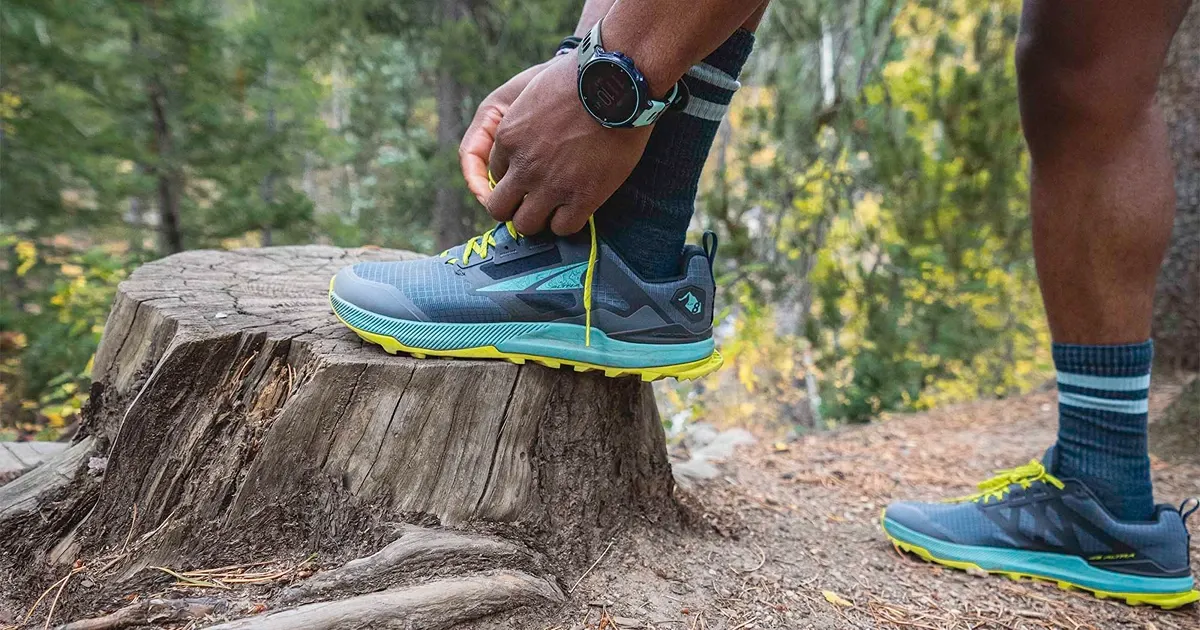
The ALTRA Lone Peak 8 is a moderately cushioned trail shoe with zero drop: its heel and forefoot both sit on 25 mm of foam. It uses Altra’s widest last, the Original FootShape, so your toes have room to spread, and it adds a StoneGuard rock plate and a MaxTrac rubber outsole. Altra’s listed men’s weight is 10.7 oz (303 g) per shoe, and its list price at launch was $140.
Altra released the Lone Peak 8 in January 2024. It has since been replaced by the Lone Peak 9 (January 2025) and the Vibram-soled Lone Peak 9+ (March 2025), so the 8 is now the previous model. It’s still a sound shoe, and the 9 changed relatively little, which makes a discounted 8 worth considering. The differences are covered below.
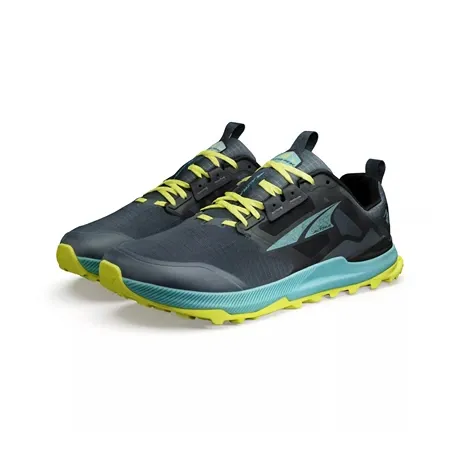
ALTRA Men’s Lone Peak 8 Trail Running Shoe
A 25 mm, zero-drop trail shoe with Altra's roomy Original FootShape toe box, a StoneGuard rock plate, and a MaxTrac outsole.
Altra Lone Peak 8 Review: Quick Verdict
The Lone Peak 8 suits runners and hikers who want a wide toe box, a level platform, and a shoe that keeps them close to the ground. It’s a do-everything trail shoe for moderate terrain, long hikes, and thru-hikes rather than a race shoe or a plush maximal cushion shoe.
The main things to weigh are the zero-drop platform, which takes time for your calves and Achilles to adapt to, and the MaxTrac rubber, which reviewers rate as good on dry dirt and rock but less secure on slick wet rock than Vibram Megagrip. If wet-rock grip matters most, the Lone Peak 9+ swaps in Megagrip.
Altra Lone Peak 8 (men's) specs at a glance
| Spec | Value | Note |
|---|---|---|
| Stack height | 25 mm heel, 25 mm forefoot | Per Altra |
| Drop | 0 mm | Zero drop |
| Weight | 10.7 oz (303 g) per shoe | Women's: 9.1 oz (259 g) |
| Midsole | Altra EGO foam | Moderate cushioning |
| Rock plate | StoneGuard | Flexible underfoot protection |
| Outsole | MaxTrac rubber | Multi-directional lugs |
| Upper | Ripstop mesh | New for the Lone Peak 8 |
| Fit | Original FootShape | Regular and wide widths |
| List price | $140 | $10 less than the Lone Peak 7 |
First Impressions
The Lone Peak 8 looks almost identical to the Lone Peak 7, and most of what changed is in the upper. Altra replaced the 7’s see-through mesh with a ripstop mesh meant to resist tearing, a response to durability complaints about the 7’s upper. Reviewers describe the new fabric as slightly thinner and less soft, but breathable and quick to dry.
Altra also reworked the quarter panel and lacing. iRunFar notes welded overlays running from the midfoot to the heel, a tighter tongue gusset on the outer side to keep debris out, longer laces, two extra eyelets in the rubber reinforcements, and longer pull tabs on the tongue and heel. The toe box uses less material to cut down on creasing without losing volume.
Natural Fit and Feel
The Lone Peak’s defining features are its zero-drop platform and its toe box. Zero drop means the heel and forefoot sit at the same height (here, 25 mm), the way your foot rests when you stand barefoot. Many conventional running shoes have 8 to 12 mm of drop, and trail shoes like the Hoka Speedgoat and Topo MTN Racer split the difference at 5 mm.
Altra builds its shoes on three foot-shaped lasts. Original FootShape, used on the Lone Peak, is the roomiest, with space for your toes to spread out instead of tapering to a point. That room helps with swelling on long days and is a big part of why the Lone Peak is popular with long-distance hikers.
The Altra EGO midsole is a fairly firm foam rated as moderate cushioning. It gives enough protection for long days on rocky trails while letting you feel the ground.
Adapting to zero drop
If your current shoes have a conventional 8 to 12 mm drop, a zero-drop shoe shifts more work to your calves and Achilles tendons. iRunFar’s reviewer recommends building up time and mileage in the shoe gradually, for example by using it for shorter runs or hikes at first and alternating with your old shoes for a few weeks.
Built for the Trail
Traction comes from Altra’s MaxTrac outsole, with multi-directional lugs and more lugs under the midfoot than earlier versions. iRunFar found the grip adequate on most surfaces but said slick wet rock and snow over mud need care, and that the rubber is durable enough for moderate technical terrain without matching Vibram for toughness.
The StoneGuard rock plate sits in the midsole to blunt sharp rocks without making the shoe stiff. A hook-and-loop GaiterTrap tab at the heel holds trail gaiters; Treeline Review notes the Lone Peak 7’s front gaiter ring was removed, though gaiters can still hook to the laces.
One trade-off for the weight saved: the Lone Peak 8 has less rubber bumper on the sides of the toe box than the 7, with slightly thicker rubber over the big toe.
Sizing and Width
Most reviewers find the Lone Peak 8 true to size in length, but it’s a roomy shoe. Treeline Review found it runs slightly larger than the Lone Peak 7, and one of its testers went down a half size. People with narrow feet often size down a half size in the Lone Peak, while those with wide feet usually keep their normal running size.
The Lone Peak 8 also comes in a wide (2E) version. Because the regular width is already generous, try the regular first unless you know you need wide. If you can, buy from a retailer with easy returns and try two sizes at home.
Lone Peak 8 vs. Lone Peak 7
The Lone Peak 8 is a refinement, not a redesign. The stack height, zero drop, EGO midsole, StoneGuard, and Original FootShape fit carried over, and the weight is nearly identical. The changes:
- Upper: ripstop mesh instead of the 7’s more see-through mesh, aimed at durability
- Lacing and fit: updated quarter panel, extra eyelets, tighter tongue gusset
- Outsole: MaxTrac with sharper, more numerous lugs at the midfoot
- Gaiter attachment: front gaiter ring dropped; heel GaiterTrap kept
- Toe protection: less side bumper rubber
- Price: $140 at launch, $10 less than the 7
Lone Peak 8 vs. Lone Peak 9 and 9+
The Lone Peak 9, released in January 2025, kept the same 25 mm, zero-drop platform. Altra gave it a redesigned ripstop upper with no-sew overlays, a refreshed EGO midsole, and an updated MaxTrac outsole described as stickier and more durable. Altra lists it at 11.15 oz in a men’s 10.5, slightly heavier than the 8, and it kept the $140 price and the wide option.
The Lone Peak 9+, released in March 2025, is the same shoe with a Vibram Megagrip outsole, which grips wet rock better than MaxTrac. Altra lists it at 11.55 oz in a men’s 10.5, and it costs about $155. It’s sold through Altra and REI and isn’t offered in wide.
Choose the Lone Peak 8 if you find it discounted and you mostly run or hike on dry or mixed trails. Choose the 9 if you want the current version and the widest choice of sizes. Choose the 9+ if you often cross wet rock and are willing to give up the wide option. We cover the Lone Peak 9 in our guide to the best hiking shoes.
Waterproof and Mid Versions
There’s no waterproof Lone Peak 8. During its run, Altra’s weatherproof Lone Peaks were the separate Lone Peak ALL-WTHR Low 2 and Mid 2, which wrap the foot in an eVent membrane bootie for wet weather on the same 25 mm, zero-drop platform with MaxTrac and StoneGuard. With the Lone Peak 9, Altra added the Lone Peak 9 Waterproof in Low and Mid versions, and it also sells the Lone Peak Hiker 3, a hiking-specific version.
A waterproof membrane keeps out puddles and wet grass, but it also traps heat and takes longer to dry once water gets in over the collar. For warm weather and stream crossings, the breathable regular Lone Peak is usually the better choice.
Lone Peak 8 vs. Hoka Speedgoat 7 vs. Topo MTN Racer 4
| Shoe | Stack (heel/forefoot) | Drop | Men’s weight per shoe | Outsole | List price |
|---|---|---|---|---|---|
| Altra Lone Peak 8 | 25/25 mm | 0 mm | 10.7 oz | MaxTrac | $140 |
| Altra Lone Peak 9 | 25/25 mm | 0 mm | 11.15 oz (size 10.5) | MaxTrac | $140 |
| Altra Lone Peak 9+ | 25/25 mm | 0 mm | 11.55 oz (size 10.5) | Vibram Megagrip | About $155 |
| Hoka Speedgoat 7 | 38/33 mm | 5 mm | 9.6 oz (size 9) | Vibram Megagrip, 5 mm lugs | About $165 |
| Topo MTN Racer 4 | 33/28 mm | 5 mm | 10.4 oz (size 9) | Vibram Megagrip | $155 |
Weights are each maker’s or retailer’s listed figure, and the reference sizes differ, so treat small gaps as approximate.
The Hoka Speedgoat 7, released in February 2026 to replace the Speedgoat 6, is the choice if you want much more cushion. It has roughly 13 mm more foam under the heel, a 5 mm drop, and deep Megagrip lugs, and it’s lighter. The trade-offs are a narrower toe box and less ground feel. Hoka offers it in wide.
The Topo MTN Racer 4 sits in between. Topo also builds around a roomy, foot-shaped toe box, but the MTN Racer has more cushion (33 mm at the heel), a modest 5 mm drop, and Megagrip rubber. It’s a good option if you like the Lone Peak’s toe room but don’t want to go all the way to zero drop.
The Lone Peak 8 is the lowest and most ground-connected of the three, and the only one with zero drop and Altra’s widest fit.
Who It’s For
The Lone Peak 8 is a good fit for:
- Runners and hikers with wide forefeet, or anyone who wants their toes to spread naturally
- Long-distance hikers and thru-hikers who want a light, breathable trail shoe instead of a boot
- People already comfortable in zero-drop or low-drop shoes
- Trail runners on moderate terrain who prefer ground feel over maximal cushioning
Skip it if you have narrow feet and like a locked-in fit, need maximal cushioning for long downhills, or can’t take a few weeks to transition from a high-drop shoe.
Tradeoffs?
If you’re new to zero-drop shoes, expect an adjustment period; your calves and Achilles might take time to adapt. The Lone Peak is also not a maximalist cushion shoe. At 25 mm, it has noticeably less foam than a Speedgoat, so if you prefer plush padding over ground feel, look at a higher-stack shoe.
The other trade-offs are grip and protection. MaxTrac is less tenacious than Vibram Megagrip on wet rock, and the thinner side bumpers give your toes less protection when kicking rocks. And the roomy fit that makes the Lone Peak comfortable on long days can feel less secure on fast, technical descents.
Final Verdict
The ALTRA Lone Peak 8 is a refined version of a long-running design: zero drop, 25 mm of firm EGO foam, a rock plate, and the roomiest toe box in Altra’s lineup, with a tougher ripstop upper than the Lone Peak 7. It’s a dependable choice for long trail days and thru-hikes on moderate terrain.
Bottom line? The Lone Peak 9 has replaced it, but the changes are small. If you find the 8 on sale in your size, it’s a good buy. If you need the newest version, a wide size that’s sold out in the 8, or Vibram grip, go with the Lone Peak 9 or 9+.