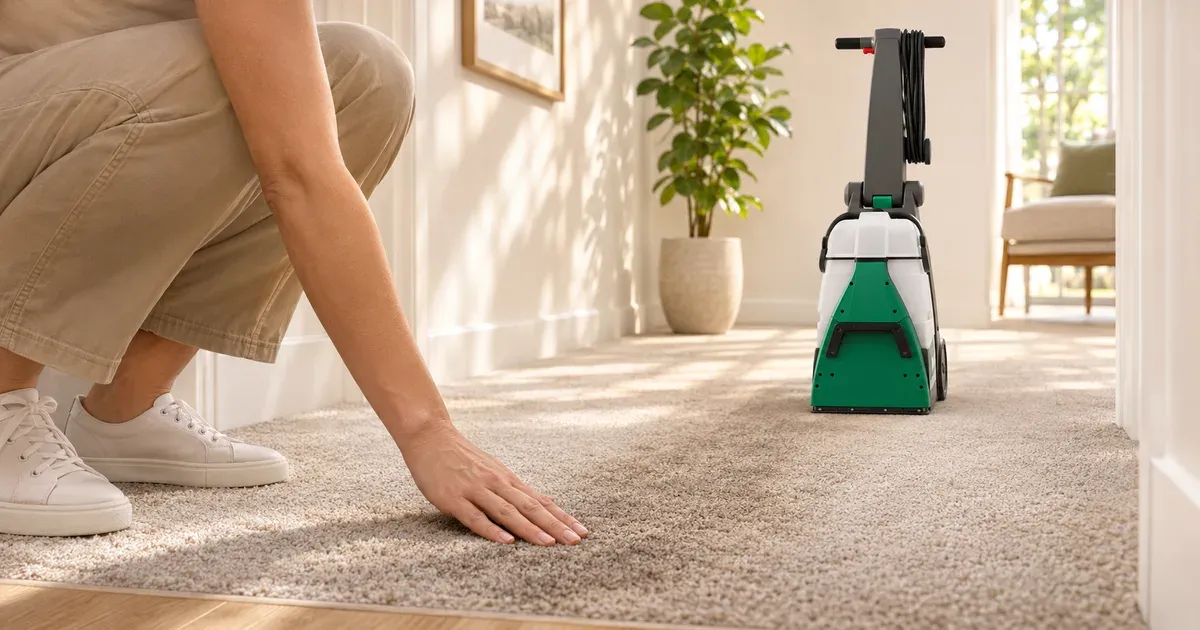
The short answer: the two most likely causes are wicking and soap residue. Wicking is soil left deep at the base of the fibers and in the backing that travels up to the tips as the carpet dries, so stains and traffic lanes reappear within a day or two. Residue is leftover shampoo that turns sticky and grabs dirt from shoes, so the carpet gets dirty again quickly. Both come from too much water or formula and too little extraction. The fix for both: let it dry, vacuum, then mist with water and blot, or rinse with plain water and extract well.
Which Problem Do You Have?
| What you see | When | Likely cause |
|---|---|---|
| Old stains or dark patches come back | As the carpet dries, within a day or two | Wicking |
| Traffic lanes get dirty again fast | Over the next days or weeks | Residue and rapid resoiling |
| Carpet feels stiff, sticky or crunchy | Once dry | Soap residue |
| Yellow or tan blotches on jute-backed or natural-fiber carpet | After slow drying | Browning |
| Spots look pale, yellow or worn where they were dark before | Right after cleaning | Hidden damage revealed (urine, old spotters, wear) |
| Patchy, damp, musty | Next day | Overwetting / slow drying |
Wicking
The IICRC, the cleaning industry’s standards body, describes wicking as “the upward and or outward migration of water-soluble materials” as carpet dries. No cleaning method removes 100% of deeply embedded soil; what stays at the base of the yarns and in the backing moves to the tips and becomes visible again. The IICRC says wine and coffee that reached the backing or pad often reappear within a few days.
The IICRC’s fix:
- Let the carpet dry for at least 48 hours.
- Vacuum slowly with a brush-roll upright from three or more directions.
- Lightly mist distilled water on the spot and blot with a microfiber or white cotton towel. Keep going while soil transfers to the towel.
- Cover with 6 to 10 layers of white paper towel or a folded white terry towel, weigh it down (books in a plastic bag), and leave it 6 to 8 hours, changing towels until nothing transfers.
- Let it dry and check. If it still doesn’t look right, call a certified cleaner.
The IICRC says 3% hydrogen peroxide also works on wicking spots, but not on wool or other natural fibers without testing.
Soap Residue and Rapid Resoiling
Shaw’s care guide says to always rinse with water after cleaning “to remove detergent residue that may become sticky and cause rapid resoiling.” The IICRC lists the common causes of resoiling: detergent not rinsed out, too much soap from DIY cleaning or spotting, oily residue from feet or pets, carpet walked on before it was dry, and outdoor contaminants like road salt and blacktop.
Fix: run the carpet cleaner again with plain warm water and no formula, then make extra dry passes. Hoover’s SmartWash manual recommends a water-only rinse pass every time. Full steps in how to get soap residue out of carpet.
Overwetting and Slow Drying
Water that sinks into the backing carries soil with it and dries slowly, feeding wicking and odors. Hoover sets a limit of 4 wet strokes on any area; Bissell says not to overwet. Finish with dry passes until little water shows in the nozzle and run fans. See how many passes with a carpet cleaner and how long does carpet take to dry.
Browning
The IICRC says cellulosic browning happens when plant-based fibers like jute or cotton get wet and dry slowly: sugars and lignin rise to the surface and leave yellow-to-brown marks. It’s often confused with wicking. The IICRC says not to try to fix browning yourself; call a certified technician. Prevent it by drying fast with fans and ventilation.
Damage the Dirt Was Hiding
Sometimes cleaning works and reveals damage. The IICRC says aged pet urine can permanently change dyes and weaken fibers, and that “after cleaning, these areas are more obvious because the soils which hid the changed color and damaged fibers have been removed.” Old “Oxy” spot removers left unrinsed can bleach carpet yellowish-brown, pink or orange over time; that can only be fixed by dyeing or patching. Worn traffic lanes look duller once clean, too.
How to Prevent It Next Time
- Vacuum thoroughly first.
- Use the measured amount of the maker’s formula, not extra.
- Pretreat stains, but rinse spotter products out.
- Limit wet passes; finish with plenty of dry passes.
- Do a final rinse pass with water only.
- Dry fast and keep people off until it’s dry.
- Put walk-off mats at entrances, as both Shaw and the IICRC suggest.
Dirtier After Cleaning FAQ
Why do stains come back after carpet cleaning?
Wicking: soil or the spill itself is still in the backing or pad, and it rises to the fiber tips as the carpet dries. Mist with distilled water and blot, then weight towels on the spot.
Why is my carpet darker after cleaning?
It may still be damp; wet carpet looks darker. If it’s dry and still dark in patches, it’s wicking or residue.
Does steam cleaning make carpet dirtier?
Not if the soap is rinsed out and the carpet is extracted well. Residue and overwetting are what make it resoil.
How long should I wait before fixing wicking?
The IICRC says to let the carpet dry thoroughly for at least 48 hours first.
Will vacuuming fix wicking?
It helps. The IICRC’s first step after drying is a slow vacuum from three directions, then misting and blotting.