Dyson vacuums are made in Asia, not Britain: Dyson’s own factories are in Singapore and the Philippines, and it uses contract manufacturers in Malaysia, the Philippines and China. Shark vacuums are made by third-party factories, primarily in China, with other suppliers in Vietnam, Malaysia, Thailand, Indonesia and Cambodia. Neither company makes vacuums in the United States. Dyson is headquartered in Singapore; SharkNinja in Needham, Massachusetts.
Both answers come from the companies’ own filings, checked November 17, 2026.
Dyson vs Shark Manufacturing
| Dyson | Shark (SharkNinja) | |
|---|---|---|
| Headquarters | Singapore | Needham, Massachusetts |
| Own factories | Singapore and the Philippines | None; SharkNinja designs products and contracts out assembly |
| Contract manufacturers | Malaysia, the Philippines, China | Primarily China; also Vietnam, Malaysia, Thailand, Indonesia, Cambodia |
| Design and engineering | Singapore, the UK, Malaysia, China, the Philippines | United States, United Kingdom, China |
| Source | Dyson Modern Slavery and Child Labour Prevention Statement 2025 (April 2026) | SharkNinja annual report, Form 10-K, fiscal 2025 |
Where Dyson Vacuums Are Made
Dyson’s 2025 statement says the Dyson Group “has engineering, research, development, manufacturing and testing operations in Singapore, the UK, Malaysia, China, and the Philippines,” that its “own manufacturing operations are based in Singapore and the Philippines,” and that its supply chain “includes contract manufacturers in Malaysia, the Philippines, and China.” Dyson moved its headquarters to Singapore and employs more than 10,000 people worldwide.
Dyson doesn’t publish which plant builds which model, and its US product pages and Amazon listings don’t state a country of origin. The UK is where Dyson started and still does research and engineering, but its vacuums aren’t built there.
Where Shark Vacuums Are Made
SharkNinja’s 10-K for 2025 says its third-party suppliers “are responsible for the assembly of our products and are primarily based in China,” and that it also works “with certain suppliers in various regions across Southeast Asia, including Vietnam, Malaysia, Thailand, Indonesia and Cambodia.” It describes “a significant proportion” of its products as manufactured in China, Vietnam and other countries outside the United States. SharkNinja’s own product design teams are in the United States, the United Kingdom and China.
So a Shark PowerDetect or Pet stick sold in the US is designed by an American company and assembled under contract in Asia, most often in China.
Does Where It’s Made Matter?
For buyers, the country matters less than the maker behind the factory. Both companies set the design and quality standards and stand behind the product with their own warranties: 5 years on Shark’s PowerDetect and PowerLite sticks, and 2 years on Dyson’s cordless vacuums. See cordless vacuum warranties.
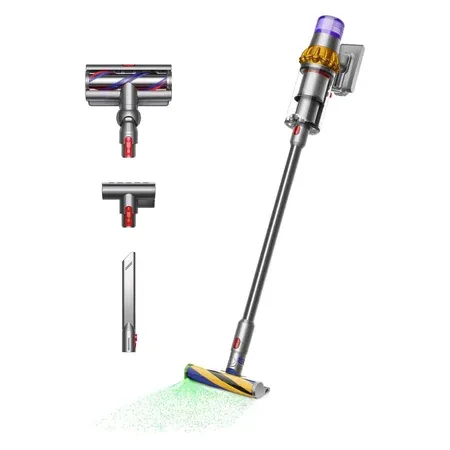
Dyson's best-known cordless stick
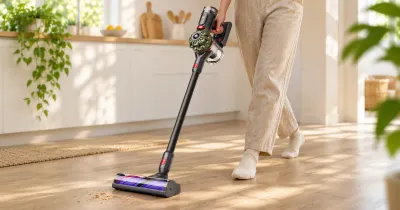
Dyson V15 Detect
240 AW, up to 60 minutes, laser dust lighting and a click-in battery. $599.99 on Amazon on Nov 17.
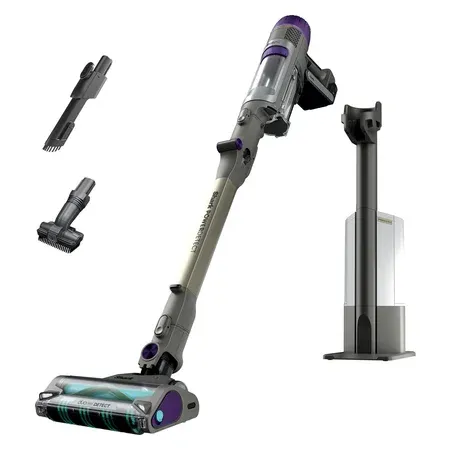
Shark's current self-emptying stick
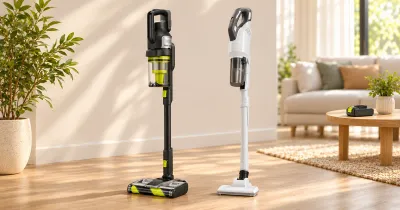
Shark PowerDetect Clean & Empty IP3251
Up to 70 minutes, a self-emptying base and a 5-year warranty. $399.95 on Amazon on Nov 17.
For how the two compare as vacuums, see Shark vs. Dyson.
Where Vacuums Are Made FAQ
Are Dyson vacuums made in the UK?
No. Dyson designs and engineers in the UK, but its own factories are in Singapore and the Philippines, and it uses contract manufacturers in Malaysia, the Philippines and China.
Are Dyson vacuums made in China?
Some may be. Dyson’s 2025 statement lists contract manufacturers in China, alongside Malaysia and the Philippines, but doesn’t say which models come from which country.
Where are Shark vacuums made?
By third-party factories, primarily in China, with other suppliers in Vietnam, Malaysia, Thailand, Indonesia and Cambodia, according to SharkNinja’s 2025 annual report.
Are any Shark or Dyson vacuums made in the USA?
No. SharkNinja is an American company, but its products are assembled by suppliers in Asia, and Dyson’s factories are in Asia.
Is Shark an American company?
Yes. SharkNinja is headquartered in Needham, Massachusetts, and files with the US Securities and Exchange Commission.