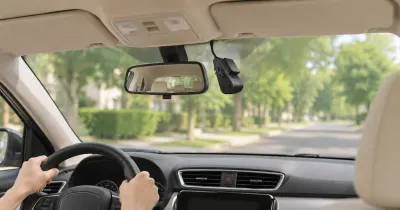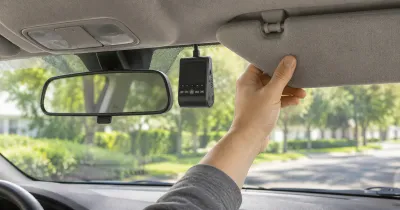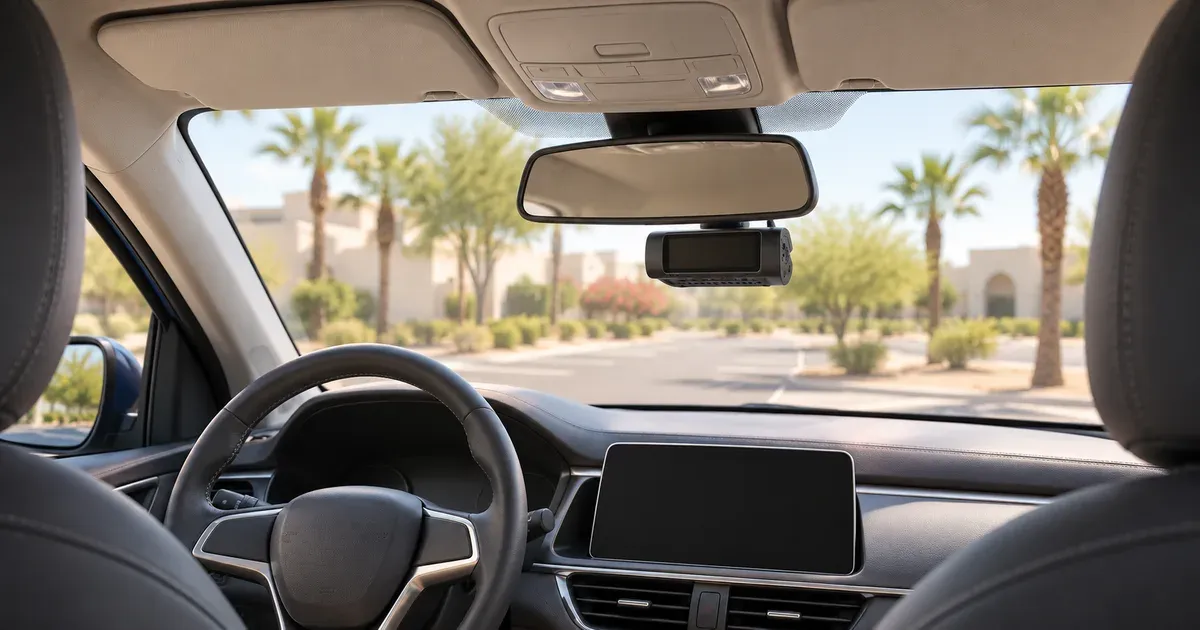
A supercapacitor dash cam is the better choice for almost everyone, and essential if your car sits in the sun. The supercapacitor models below are rated to operate up to 60–80°C (140–176°F), while battery models from Nextbase stop at 45°C (113°F), and there’s no battery for makers to treat as a wear item. A battery dash cam only makes sense if you want the camera to keep running for a few minutes with no power at all, as Garmin’s X series can.
Prices checked November 19, 2026 (Amazon): VIOFO A229 Pro 2CH $219.99, Garmin Dash Cam Mini 3 $99.99, Garmin Dash Cam X310 $349.99.
Supercapacitor vs Battery at a Glance
| Supercapacitor | Lithium-ion / lithium-polymer battery | |
|---|---|---|
| What it does | Holds enough charge to close the last video file when power cuts | Runs the camera for minutes without power |
| Runtime with no power | Seconds | Up to 20 minutes (Garmin X series), up to 30 minutes (Garmin Dash Cam Live), about 15 minutes (Nextbase 622GW) |
| Rated operating temperature (models below) | -20°C (Thinkware -10°C) to 60–80°C | -20°C (70mai A810 -10°C) to 45–70°C |
| Parking mode | Needs a hardwire kit, OBD cable or battery pack | Same for long parking; Garmin’s X series can run Parking Guard on its internal battery briefly |
| Wear | No battery to replace | Battery is a consumable: Garmin and 70mai exclude batteries from warranty unless defective, and Nextbase covers them for 6 months |
| Who uses it | VIOFO, Vantrue, BlackVue, Thinkware U3000 series, Garmin Mini 3, Redtiger F7N, Rexing | Garmin X110/X210/X310 and Live, Nextbase 622GW/522GW/322GW, 70mai A810/A510 |
Texas Instruments describes supercapacitors as parts that “charge and discharge rapidly and operate across a broad temperature range” but “store less total energy than batteries.” That’s the trade in one line: a dash cam supercapacitor can’t run the camera, but it handles a wider temperature range.
Operating Temperature by Model
Maker-rated operating ranges:
| Model | Power | Operating range |
|---|---|---|
| BlackVue DR770X-2CH II | Supercapacitor | -20 to 80°C |
| BlackVue DR970X-2CH LTE Plus II | Supercapacitor | -20 to 70°C |
| Redtiger F7N | Supercapacitor | -4 to 158°F (-20 to 70°C) |
| VIOFO A229 Pro, A229 Plus, A119 Mini 2, A119M Pro | Supercapacitor | -20 to 65°C |
| BlackVue Elite 9 and Elite 10 | Supercapacitor | -20 to 65°C |
| Vantrue N4 Pro S, N4S, N5S, S1 Pro | Supercapacitor | -20 to 60°C (manuals) |
| Garmin Dash Cam Mini 3 | Supercapacitor | -20 to 60°C |
| Thinkware U3000 PRO, U3000 | Supercapacitor | -10 to 60°C |
| Garmin Dash Cam X310 | Li-ion battery | -20 to 60°C |
| 70mai A510 | 500mAh Li-ion battery | -20 to 70°C |
| 70mai A810 | 500mAh Li-ion battery | -10 to 60°C |
| Nextbase 622GW, 522GW, 322GW | 320mAh / 280mAh Li-Po battery | -20 to 45°C |
VIOFO adds that its supercapacitor cameras can be stored at up to 70°C (158°F) and shut themselves off if they overheat, restarting once they cool. If you live somewhere hot, see our best dash cams for hot weather, which covers more than 30 models.
Best Supercapacitor Dash Cam: VIOFO A229 Pro
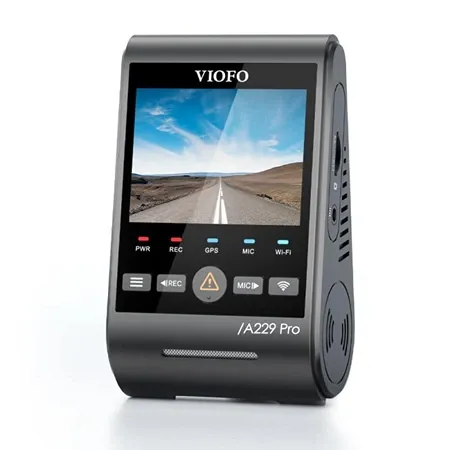
The A229 Pro records 4K on a STARVIS 2 IMX678 up front and 2K on an IMX675 at the rear, runs on a supercapacitor rated -20 to 65°C, and has 5GHz Wi-Fi and GPS. Every VIOFO, Vantrue and BlackVue camera uses a supercapacitor, so you can choose among them on video and features rather than power.
Best supercapacitor dash cam
VIOFO A229 Pro 2CH
4K front and 2K rear on STARVIS 2 sensors, supercapacitor rated -20 to 65°C, 5GHz Wi-Fi and GPS.
Best Small Supercapacitor Cam: Garmin Dash Cam Mini 3
Garmin moved its tiny Mini line to a supercapacitor while keeping lithium batteries in the X series. The Mini 3 records 1080p, has no screen and no GPS, and is rated -20 to 60°C. Parking alerts need Garmin’s constant-power cable and a Vault subscription.
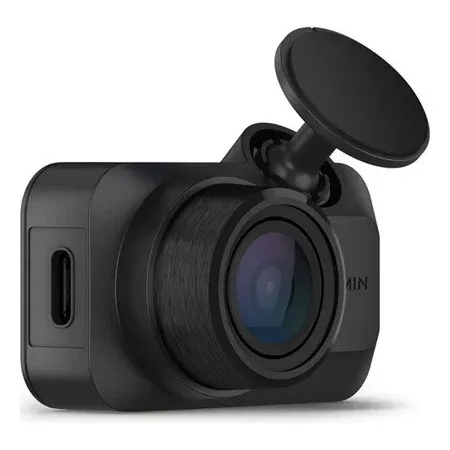
Small supercapacitor cam
Garmin Dash Cam Mini 3
1080p, 140° view, supercapacitor rated -20 to 60°C, no screen. Sold by Amazon.com.
When a Battery Dash Cam Makes Sense: Garmin X310
Garmin’s X310 runs on a lithium-ion battery for “up to 20 minutes.” Its Parking Guard can use that battery (“Run on Battery”) to record incidents for a short time after you park without any hardwiring, though recording the 15 seconds before an incident needs external power, and phone alerts need a Vault subscription. For short stops, that’s a convenience a supercapacitor camera can’t offer. For overnight parking, both types need constant power.
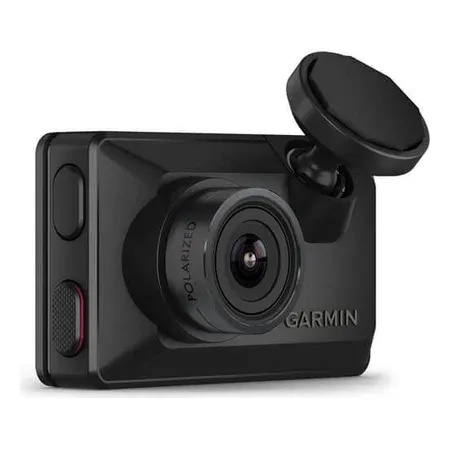
Battery cam with short unplugged recording
Garmin Dash Cam X310
4K30 HDR, 2.41-inch touchscreen, GPS, Li-ion battery for up to 20 minutes, rated -20 to 60°C.
Do Dash Cam Batteries Catch Fire?
No dash cam has been recalled in the US or Canada. A search of every CPSC recall since January 2015, and of Health Canada’s recall database, turned up no dash cam recall from any brand as of November 19, 2026. Battery dash cams still carry the same heat limits as any lithium device: Nextbase rates its battery cameras to 45°C, so in hot climates a supercapacitor camera rated to 65°C or higher leaves far more margin. Our hot-weather guide lists the rated range of each model.
Supercapacitor vs Battery Dash Cam FAQ
Which is better, a supercapacitor or battery dash cam?
A supercapacitor dash cam for most people. The supercapacitor models here are rated to 60–80°C and have no battery to wear out. Pick a battery model only if you want a few minutes of recording with no power connected.
How long does a supercapacitor dash cam run without power?
Only long enough to save the file it’s recording, a matter of seconds. It needs the car’s power, a hardwire kit or a battery pack to record.
Can a supercapacitor dash cam record in parking mode?
Yes, with a hardwire kit, an OBD-II cable or an external dash cam battery pack. VIOFO, Vantrue, BlackVue and Thinkware all use supercapacitors and all offer parking modes. See the best dash cams for parking mode.
Do Garmin dash cams use batteries?
The X110, X210, X310 and Dash Cam Live use lithium-ion batteries. The Mini 3 uses a supercapacitor.
Do Nextbase dash cams have batteries?
Yes. The 622GW and 522GW have a 320mAh lithium-polymer battery and the 322GW a 280mAh one. Nextbase rates them to operate from -20 to 45°C and covers the battery for six months under its warranty.
Sources
- Texas Instruments, Meeting the Power Demands of 12V Auxiliary and Supercapacitor Batteries in Automotive Applications (SBAA732, July 2025)
- VIOFO A229 Pro and Can dashcams withstand heat?
- Garmin Dash Cam X310, X310 manual, Mini 3 and Dash Cam Live
- Nextbase 622GW manual and 322GW manual
- BlackVue Elite 9, DR970X LTE Plus II and DR770X-2CH II; Thinkware U3000 PRO; 70mai A810 and A510; Redtiger F7N
- CPSC recall database and Health Canada recalls