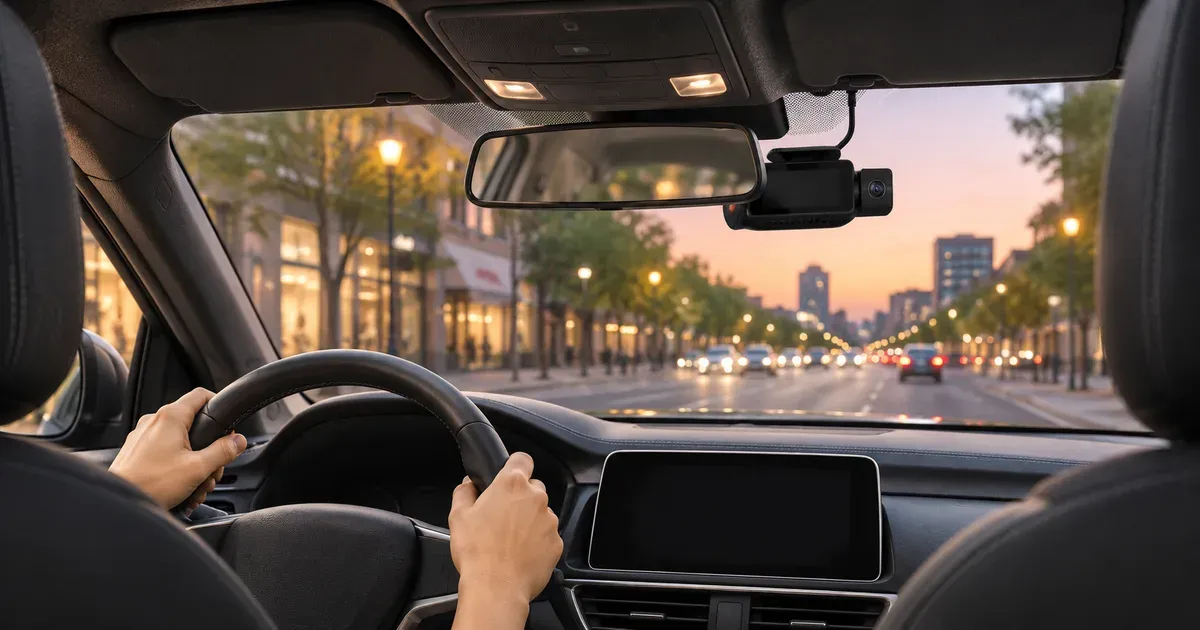
STARVIS 2 is Sony’s second generation of its back-illuminated sensor technology for security and dash cameras. Per Sony’s data sheets, it has more than 8 dB wider dynamic range than STARVIS at the same pixel size in a single exposure, better near-infrared sensitivity, and Clear HDR, which captures the bright and dark exposures at the same instant so fast-moving cars don’t smear. In dash cams that shows up as fewer blown-out headlights and readable detail in shadows at night. Both generations share the same minimum sensitivity rating, so the gain is in contrast handling and infrared, not raw low-light sensitivity.
Prices checked November 19, 2026 (Amazon): VIOFO A229 Pro 2CH $219.99, Vantrue N4 Pro S $279.99, VIOFO A229 Plus 2CH $159.99.
STARVIS vs STARVIS 2 at a Glance
| STARVIS | STARVIS 2 | |
|---|---|---|
| Structure | Back-illuminated pixels | Back-illuminated, with deeper photodiodes and uneven photodiode surfaces |
| Sensitivity (Sony spec) | 2,000 mV or more per µm² | 2,000 mV or more per µm² |
| Dynamic range, single exposure | Baseline | More than 8 dB wider at the same pixel size |
| Near-infrared sensitivity | Good | Improved |
| HDR methods | Digital overlap (DOL) and multiple-exposure HDR | DOL HDR and Clear HDR |
| Dash cam sensors | IMX415 (4K), IMX307, IMX291, IMX290 (about 2MP) | IMX678 (4K), IMX675 (5MP), IMX662 (about 2MP) |
| Where it’s used now | Some rear and cabin cameras, BlackVue DR770X, Thinkware ARC 700 front | Front and rear of current VIOFO, Vantrue, BlackVue Elite and Thinkware U3000 PRO models |
Sony’s sensitivity figure is measured with a color sensor, a 706 cd/m² light source, F5.6 and 1-second accumulation. Sony has also announced STARVIS 3 (IMX908), which adds a LOFIC pixel structure and more than 20 dB wider single-exposure dynamic range than STARVIS 2 pixels of the same size; none of the dash cams below uses it.
Why Clear HDR Matters in a Dash Cam
Headlights at night, tunnel exits and low sun put very bright and very dark areas in the same frame. HDR combines a short and a long exposure to keep detail in both. Sony explains the difference between the two methods:
- DOL HDR captures the two images one after the other. Sony notes that the slight time gap “can cause some artifacts, such as a blurred outline and chromatic aberration, if the target is in fast motion.”
- Clear HDR captures both at the same time with different gain settings, so moving vehicles don’t produce those artifacts. Sony calls it suitable for “traffic monitoring systems and dashboard cameras,” and recommends STARVIS 2 or 3 sensors with Clear HDR for artifact-free images under backlit conditions.
Sony lists the STARVIS 2 sensors for this as the IMX585, IMX662, IMX664, IMX675, IMX678, IMX832, IMX835 and IMX838.
The Sensors in Dash Cams, From Sony’s Data Sheets
| Sensor | Generation | Optical format | Effective pixels | Pixel size | Recording resolution | HDR |
|---|---|---|---|---|---|---|
| IMX678 | STARVIS 2 | Type 1/1.8 (8.86mm diagonal) | 8.40MP | 2.0µm | 3840 x 2160 (4K), up to 60fps at 12-bit | DOL, Clear HDR |
| IMX675 | STARVIS 2 | Type 1/2.8 (6.53mm) | 5.12MP | 2.0µm | 2592 x 1944, up to 60fps at 12-bit | DOL, Clear HDR |
| IMX415 | STARVIS | Type 1/2.8 (6.43mm) | 8.46MP | 1.45µm | 3840 x 2160 (4K) | Multiple-exposure, DOL |
The IMX415 and IMX678 are both 4K sensors, but the IMX678 is physically larger, so each pixel is 2.0µm across instead of 1.45µm: about 1.9 times the light-gathering area per pixel. Sony’s dash cam page says pixel area is proportional to light-receiving capacity and recommends larger pixels for clear night recording.
Which Sensor Your Dash Cam Uses
Front / rear / cabin, from maker spec pages and manuals:
| Dash cam | Front | Rear | Cabin |
|---|---|---|---|
| VIOFO A229 Pro | IMX678 (S2) | IMX675 (S2) | 3CH: IMX307 (STARVIS 1) |
| VIOFO A229 Plus | IMX675 (S2) | IMX675 (S2) | — |
| VIOFO A229 Ultra | IMX678 (S2) | IMX678 (S2) | — |
| VIOFO A329S | IMX678 (S2) | IMX675 (S2) | — |
| VIOFO T330 3CH | IMX678 (S2) | IMX675 (S2) | IMX675 (S2) |
| VIOFO T340 | IMX678 (S2) | IMX675 (S2) | OmniVision OS04J10 (not Sony) |
| VIOFO A119M Pro / A119 Mini 2 | IMX678 / IMX675 (S2) | — | — |
| VIOFO A139 Pro (sold out) | IMX678 (S2) | IMX291 (STARVIS 1) | IMX291 (STARVIS 1) |
| Vantrue N4 Pro S | IMX678 (S2) | IMX675 (S2) | IMX662 (S2), infrared |
| Vantrue N4S | IMX675 (S2) | IMX675 (S2) | IMX675 (S2) |
| Vantrue N5S | IMX675 (S2) | IMX675 (S2) | 2 x IMX662 (S2) |
| Vantrue N5 / S1 Pro | IMX675 (S2) | STARVIS 1st gen | — |
| Vantrue S1 Pro Max | IMX678 (S2) | IMX678 (S2) | — |
| BlackVue Elite 10-2CH | IMX678 (S2) | IMX678 (S2) | Elite 10 Cabin: OmniVision OS08E10 |
| BlackVue Elite 9-2CH | IMX678 (S2) | IMX675 (S2) | — |
| BlackVue Elite 8-2CH | IMX675 (S2) | IMX675 (S2) | — |
| BlackVue DR970X-2CH LTE Plus II | STARVIS 2, 8.4MP (model not given) | STARVIS, 2.1MP | — |
| BlackVue DR770X-2CH II | STARVIS, 2.1MP | STARVIS, 2.1MP | — |
| Thinkware U3000 PRO / ARC 900 | IMX678 (S2) | IMX675 (S2) | — |
| Thinkware ARC 700 | IMX415 (STARVIS 1) | 4MP, not named | — |
| Thinkware ARC / Q200 | OmniVision (not Sony) | not named | — |
| 70mai A810 / A510 | IMX678 / IMX675 (S2) | not named | — |
| Wolfbox G900 Pro / G900 Core (mirror) | IMX678 (S2) | not named | — |
| Garmin, Nextbase, Redtiger | Not published | — | — |
“STARVIS 2” on the box doesn’t always cover every camera. Check the rear and cabin rows above before you buy, especially for 3-channel kits.
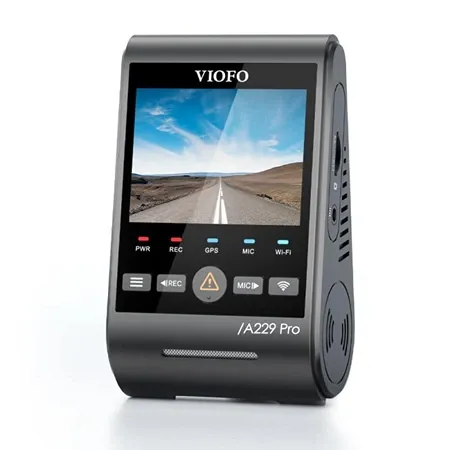
STARVIS 2 front and rear
VIOFO A229 Pro 2CH
4K front on an IMX678 and 2K rear on an IMX675, both STARVIS 2, with 5GHz Wi-Fi, GPS and a supercapacitor.
Is STARVIS 2 Worth Paying For?
For the front camera, yes, and it no longer costs much: the VIOFO A229 Plus has STARVIS 2 IMX675 sensors front and rear for $159.99, and the A119 Mini 2 has one for $95.98. The bigger decision is resolution and sensor size: the 4K IMX678 has larger pixels than the older 4K IMX415. The sensor is one part of night footage; the lens, bitrate and the camera’s image processing also matter. For night-focused picks, see the best dash cams for night driving.
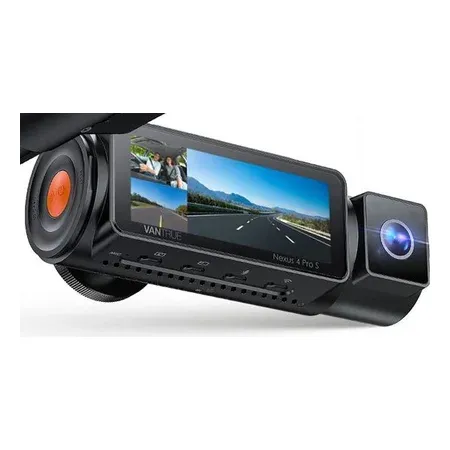
STARVIS 2 on all three cameras
Vantrue N4 Pro S
4K front (IMX678), 1440p rear (IMX675) and infrared 1080p cabin (IMX662), all STARVIS 2, with GPS.
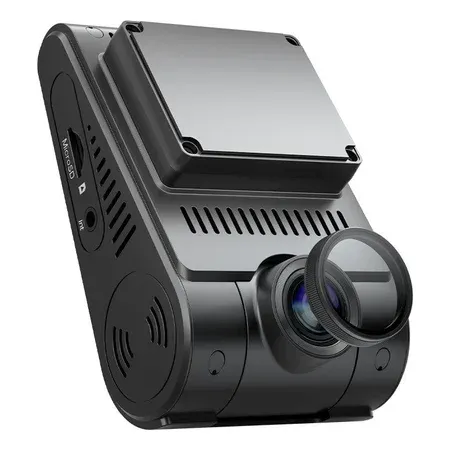
Cheapest STARVIS 2 front and rear
VIOFO A229 Plus 2CH
2K front and rear on STARVIS 2 IMX675 sensors, 5GHz Wi-Fi, GPS and a supercapacitor.
STARVIS vs STARVIS 2 FAQ
What is the difference between STARVIS and STARVIS 2?
STARVIS 2 keeps the same minimum sensitivity rating but adds more than 8 dB of single-exposure dynamic range at the same pixel size, better near-infrared sensitivity, and Clear HDR, according to Sony.
Is the IMX678 better than the IMX415?
Both record 4K. The IMX678 is STARVIS 2, has a larger Type 1/1.8 format with 2.0µm pixels (vs 1.45µm on the Type 1/2.8 IMX415), and supports Clear HDR.
Which is better, IMX675 or IMX678?
They’re the same STARVIS 2 generation with the same 2.0µm pixel size. The IMX678 is a larger 8.4MP 4K sensor; the IMX675 is a 5.1MP sensor used for 2K and 1440p cameras.
What is STARVIS 3?
Sony’s next generation (IMX908), with a LOFIC pixel structure and more than 20 dB wider single-exposure dynamic range than STARVIS 2 pixels of the same size. No mainstream dash cam on this list uses it yet.
Do all “STARVIS 2” dash cams use it on every camera?
No. VIOFO’s A229 Pro 3CH uses a STARVIS 1 IMX307 for the cabin, Vantrue’s N5 and S1 Pro use first-generation STARVIS at the rear, and BlackVue’s DR970X uses STARVIS 2 only up front.
Sources
- Sony Semiconductor Solutions, STARVIS / STARVIS 2 / STARVIS 3 technology and Dashcam application page
- Sony flyers: IMX678, IMX675 and IMX415
- VIOFO A229 Pro 3CH, A139 Pro 3CH, T330 and T340
- Vantrue N4 Pro S, N5S and N5
- BlackVue Elite 10-2CH, Elite 9-2CH, DR970X LTE Plus II and DR770X-2CH II
- Thinkware U3000 PRO and ARC 700; 70mai A810; Wolfbox G900 Core