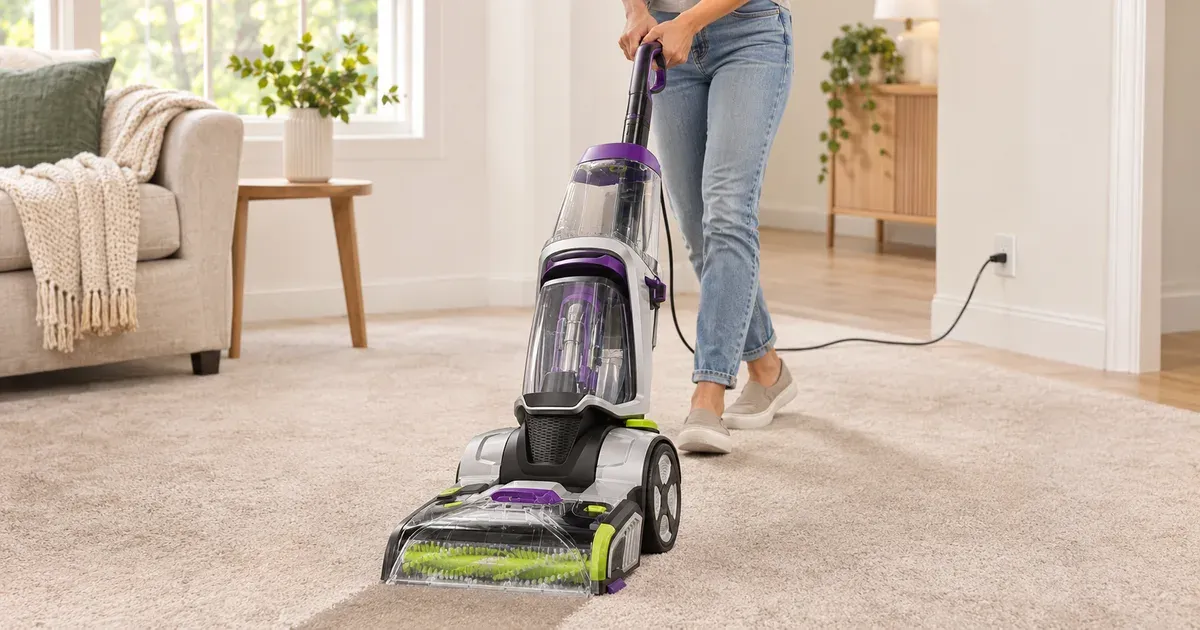
Hot water extraction is the better deep clean, and it’s the method carpet makers ask for. Shaw “recommends only hot water extraction” using CRI-certified products and equipment, and Mohawk’s warranty requires a professional cleaning every 18 months using CRI-certified products, equipment and services. Dry or low-moisture cleaning, such as powder compounds, encapsulation and bonnet cleaning, has one big advantage: the carpet is usable again much sooner. It works well between deep cleans, but it doesn’t replace them.
Hot Water Extraction vs. Dry Cleaning at a Glance
| Hot water extraction (“steam cleaning”) | Dry / low-moisture cleaning | |
|---|---|---|
| How it works | Sprays hot water and detergent into the pile, agitates, then vacuums it back out | A powder, foam or encapsulating detergent is worked into the pile, then vacuumed or buffed off with a pad |
| Depth | Flushes soil from deep in the pile | Mostly the upper pile |
| Drying | Hours. Home machines: about 30–45 min on Bissell’s Big Green (Bissell’s figure, with carpet protectant), longer on thick carpet | Usually much faster |
| Residue risk | Leftover detergent if overdosed or not rinsed | Leftover powder or polymer if not fully vacuumed |
| Over-wetting risk | Yes, if you make too many wet passes | Low |
| Carpet warranties | What Shaw and Mohawk specify | Not what Shaw specifies; check your warranty |
| DIY option | Any home carpet cleaner or rental | Dry carpet powders and spot foams |
How Hot Water Extraction Works
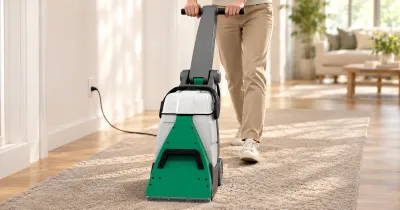
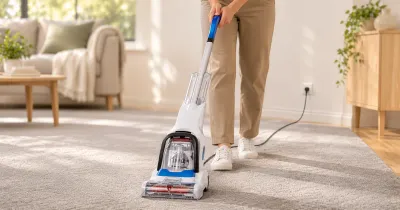
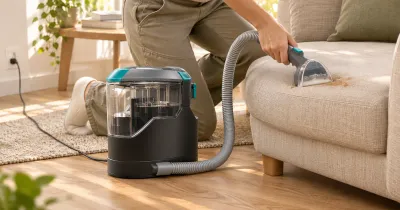
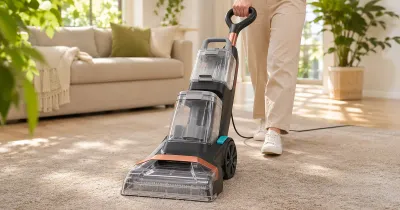
Every home carpet cleaner, from a Bissell Little Green to a rented Rug Doctor, is a hot water extractor. It sprays water mixed with formula, a brush works it into the pile, and a suction motor pulls the dirty water into a recovery tank. Professionals use the same method with truck-mounted or portable machines that run hotter and pull harder.
Home machines don’t boil water. Bissell’s guides cap tap water at 140°F, and some models, such as the Revolution HydroSteam, add a heater. See carpet cleaner vs. steam cleaner.
Done right: one or two wet passes, then dry passes until little water comes up. Rug Doctor’s Mighty Pro X3 manual limits it to two cleaning passes on an area “as over-wetting and damage may result which could include permanent staining.” Finish with a clean-water rinse pass, as Hoover recommends, to remove residue.
How Dry Cleaning Works
“Dry” carpet cleaning uses little or no water:
- Powder or compound: an absorbent powder dampened with solvent and detergent is brushed in, holds the soil, and is vacuumed out.
- Encapsulation: a detergent is sprayed on and dries into crystals that trap soil, which you vacuum up later.
- Bonnet: a rotary machine spins an absorbent pad over the surface. It cleans the tips of the pile, not the base.
These are mostly professional or commercial methods. Some are sold for DIY use as carpet powders and spot foams. Their strength is fast drying, which suits offices, rentals and homes that can’t wait for carpet to dry.
Which Should You Choose?
- Annual or 18-month deep clean: hot water extraction. That’s what Shaw and Mohawk ask for. Mohawk wants a professional and a receipt. See does a home carpet cleaner void your carpet warranty.
- Between deep cleans, high-traffic lanes: low-moisture cleaning or a quick extractor pass on traffic lanes.
- Pet urine: extraction. Urine soaks into the pad, and only a wet method plus an enzyme treatment reaches it. See how to get pet urine out of carpet with a carpet cleaner.
- Wool or delicate rugs: follow the rug maker’s care label. Rug Doctor says cool water on wool, and no extraction on natural-fiber oriental rugs, sisal or jute.
- You need the room back today: dry or low-moisture cleaning, or extraction with fans and extra dry passes. See how long carpet takes to dry.
Hot Water Extraction at Home
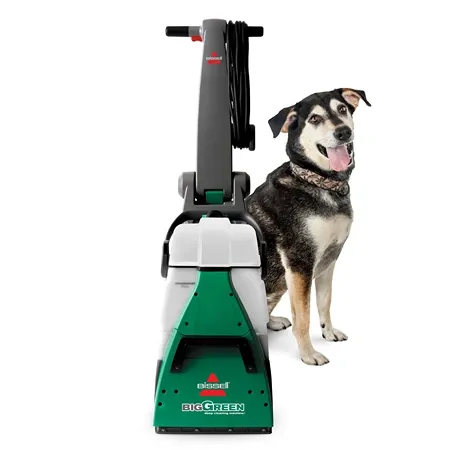
Home hot water extraction, closest to a rental
Bissell Big Green Professional Carpet Cleaner (86T3)
Bissell's largest home extractor: 1.75-gallon clean tank, 9-foot hose and a 5-year limited warranty.
The Bissell Big Green 86T3 is $429.00 on Amazon (November 21, 2026). Bissell says carpet is typically dry in 30–45 minutes after cleaning, based on its own test on carpet with protectant.
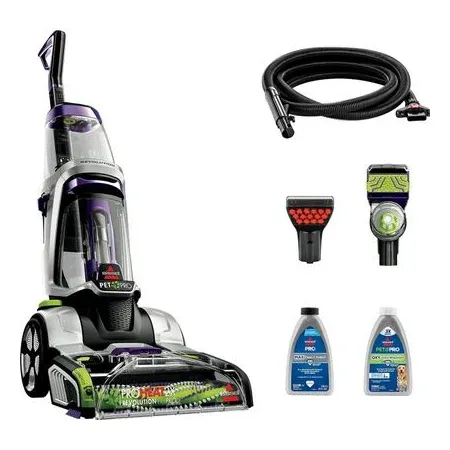
Lighter extractor with an express mode
Bissell ProHeat 2X Revolution Pet Pro Plus (3588F)
11-inch path, 1-gallon tank, 8-foot hose; Bissell quotes about 30-minute dry time in Express.
The ProHeat 2X Revolution Pet Pro Plus 3588F ($237.97) has an Express mode that Bissell says goes “dirty to dry in about 30 min.” Professional hot water extraction runs about $0.20 to $0.50 per square foot, or roughly $120 to $250 for a typical job. See professional carpet cleaning cost.
Hot Water Extraction vs. Dry Cleaning FAQ
Is hot water extraction the same as steam cleaning?
Yes, in carpet cleaning. “Steam cleaning” is the common name for hot water extraction, even though most machines spray hot water rather than steam.
Is dry carpet cleaning bad for carpet?
Not if the powder or compound is fully vacuumed out. It doesn’t clean as deep as extraction, and it isn’t the method Shaw specifies for its warranty.
Which dries faster?
Dry and low-moisture methods. Hot water extraction leaves carpet damp for hours, depending on airflow, humidity and how many dry passes you make.
Which is better for allergies?
Extraction removes soil from deeper in the pile. For allergy concerns, see the best carpet cleaners for allergies.
Sources
- Shaw, Carpet care and maintenance guide
- Mohawk, carpet warranty brochure, as reproduced by a Mohawk retailer
- Bissell, Big Green 86T3 FAQ and ProHeat 2X Revolution Pet Pro Plus 3588F
- Hoover, carpet cleaner FAQ
- Rug Doctor, Mighty Pro X3 owner’s manual