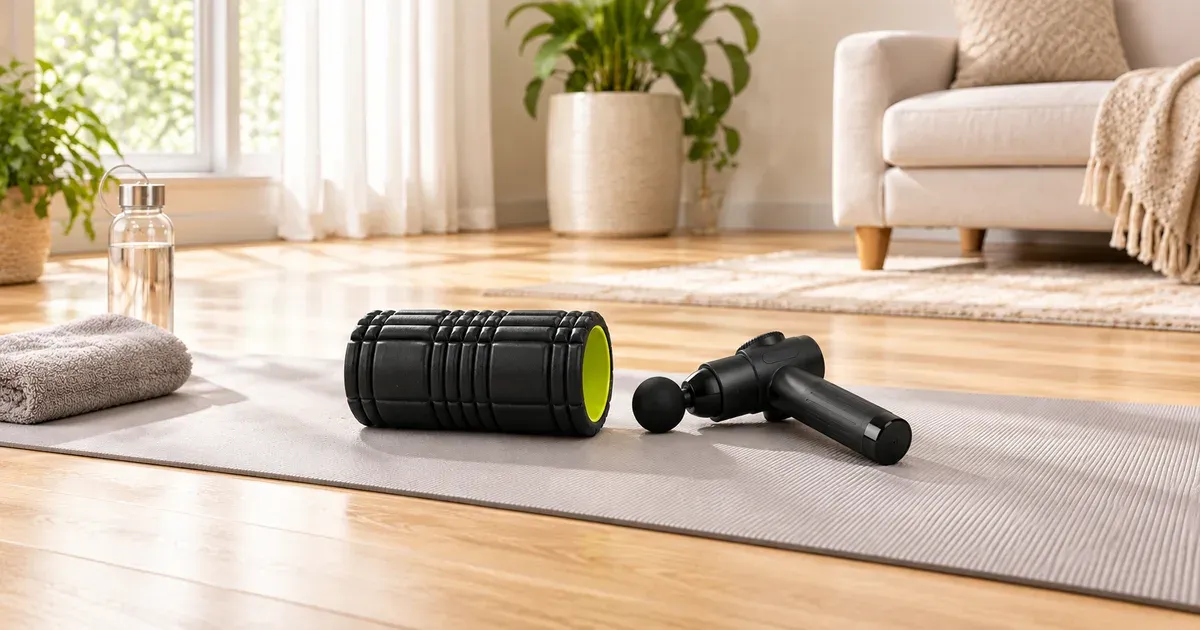
Foam rollers and massage guns are both used to loosen tight muscles before a workout and ease soreness after one. A foam roller uses your body weight to press a firm cylinder into large muscles. A massage gun uses a motor to tap a small head rapidly into a specific spot.
The short answer: if you’re buying one, start with a foam roller. It costs about $15 to $30, works well on big muscles like your quads, hamstrings, and back, and has the deeper body of research behind it. Add a massage gun if you want to target smaller areas like your calves, shoulders, and forearms, or if getting down on the floor is hard for you. A 2025 trial that compared them directly found both sped recovery of muscle stiffness after hard exercise, with neither clearly better for pain.
Foam roller vs. massage gun
| Spec | Foam roller | Massage gun |
|---|---|---|
| Typical price | $15 to $30 | $40 to $200+ |
| How it works | Your body weight presses the muscle into a firm roller | A motor taps a small head into the muscle many times a second |
| Best for | Large muscles: quads, hamstrings, glutes, upper back | Targeted spots: calves, shoulders, forearms, feet |
| Effort | Takes some strength and getting on the floor | Easy to use sitting or standing |
| Portability | Bulky, but no power needed | Compact, but needs charging |
| Research | Several meta-analyses | A growing but smaller body of studies |
Best foam roller
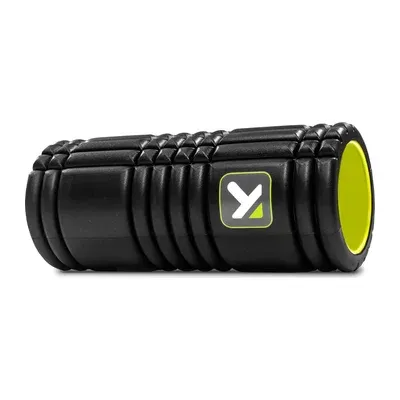
TriggerPoint GRID Foam Roller
A firm 13-inch foam roller with a hollow core and a grid surface, with more than 23,000 Amazon ratings.
Best budget massage gun
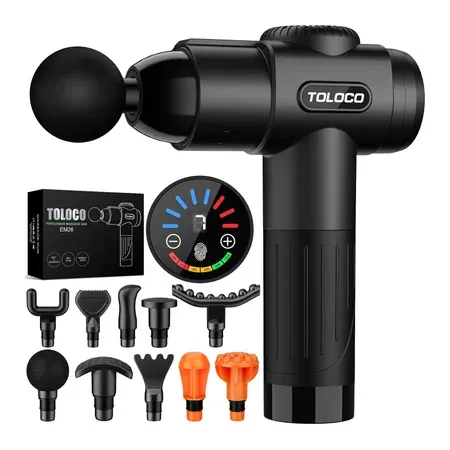
Toloco EM26 Massage Gun
A $40 massage gun with a 12 mm amplitude, 7 speeds, and 10 attachments.
What the Research Says About Foam Rolling
Foam rolling has been studied more than massage guns, and the results are consistent, if modest.
Flexibility: a 2020 meta-analysis of 26 trials in Sports Medicine found that a session of foam rolling had a large short-term effect on range of motion compared with doing nothing, though it wasn’t better than stretching. A 2022 meta-analysis in the same journal found that foam rolling regularly for several weeks also improved range of motion, with bigger gains after more than four weeks, mainly in the hamstrings and quads.
Performance and soreness: a 2019 meta-analysis of 21 studies in Frontiers in Physiology found that foam rolling before exercise slightly improved sprint performance and flexibility, with little effect on jumping or strength. Foam rolling after exercise reduced muscle pain and slightly limited the drop in sprint and strength performance that follows a hard session.
What the Research Says About Massage Guns
Massage gun research is newer and more mixed. A 2023 systematic review of 11 studies in the Journal of Functional Morphology and Kinesiology found that massage guns improved short-term flexibility and helped recovery measures like muscle stiffness, range of motion, and strength after a fatigue protocol. But they didn’t improve, and sometimes reduced, strength, balance, acceleration, agility, and explosive performance, so the authors advised against using one right before those activities.
Another 2023 review, covered in our Toloco massage gun review, found short-term gains in strength and flexibility and less muscle pain with repeated use, while noting that every study had quality limitations.
Head to Head: Which Works Better?
Few studies compare the two directly. In a 2025 trial in the Journal of Functional Morphology and Kinesiology, 60 healthy volunteers did a fatiguing calf workout to cause muscle soreness, then used a foam roller, a massage gun, or simply rested for three days. Both tools sped the recovery of muscle tone, stiffness, and elasticity compared with rest. Neither added a benefit for pain relief.
The practical takeaway is that neither tool is clearly more effective. The better choice depends on which muscles you want to work on and which tool you’ll actually use.
Which Muscles Each Tool Suits
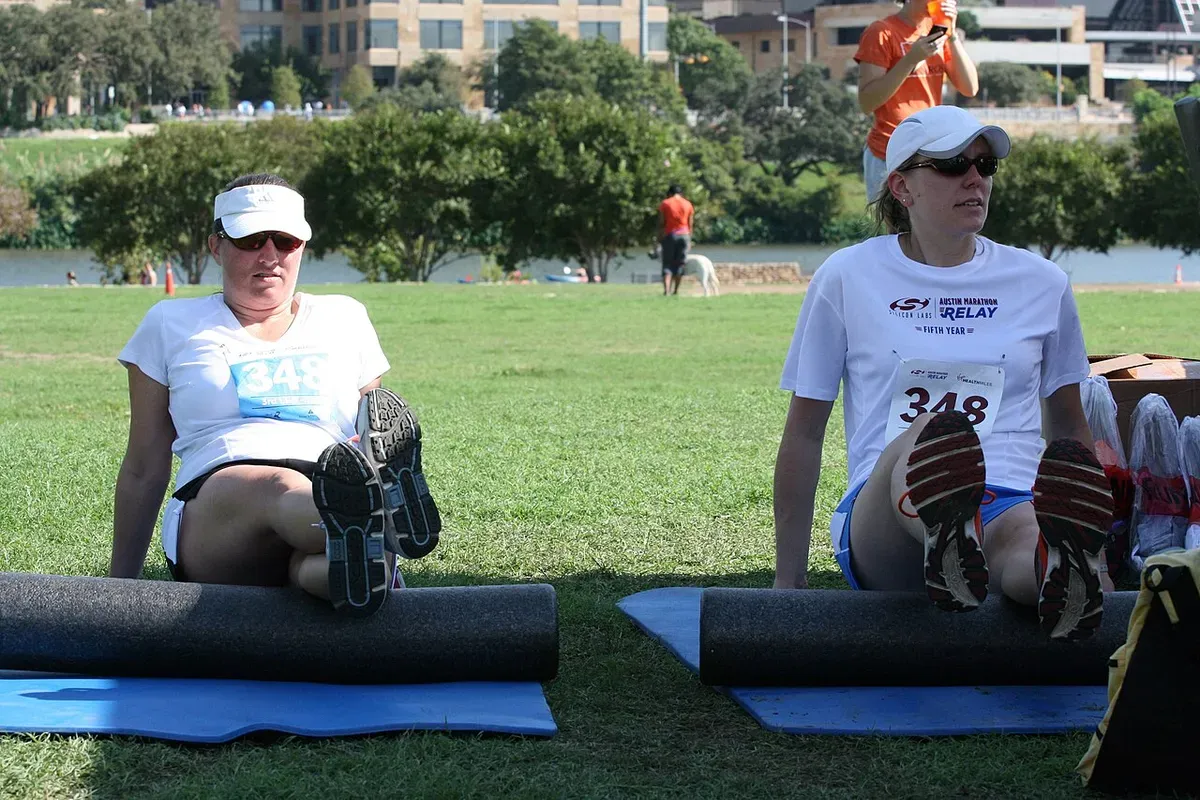
A foam roller works best on large muscle groups you can lie or sit on: your quads, hamstrings, glutes, and upper back. Rolling the whole length of a muscle takes a minute or two, and you control the pressure by shifting more or less of your weight onto it.
A massage gun works best on smaller or awkward areas a roller can’t reach easily: your calves, shoulders, chest, forearms, and the arches of your feet. It’s also easier to aim at one tight spot without having to balance on the floor.
Ease of Use
A foam roller takes some effort. You have to get on the floor and hold yourself up with your arms while you roll, which can be hard on the wrists and shoulders and difficult for people with limited mobility.
A massage gun is easier. You can use one sitting on the couch, and the motor does the work. The trade-offs are that it needs charging, makes some noise, and can be hard to reach your own back with.
Price
This is where the foam roller wins clearly. A good foam roller costs $15 to $30. Budget massage guns like the Toloco EM26 start around $40, mid-range guns like the Renpho and Bob and Brad cost $70 to $85, and premium guns run $200 or more.
Before or After a Workout?
Both tools work as part of a warm-up or a cooldown, but the evidence suggests some care before workouts. Foam rolling before exercise slightly improved sprinting and flexibility in studies, without hurting strength. Massage guns improved flexibility but didn’t help, and sometimes hurt, explosive and strength performance, so keep a pre-workout session short and light if you’re about to lift or sprint.
After a workout, either tool can ease soreness and stiffness. A few minutes per muscle group is plenty.
Safety Tips
- Start gently. Use light pressure on a roller or the lowest speed on a gun.
- Keep moving over muscle, not bones or joints.
- Avoid the front of your neck with a massage gun.
- Skip areas that are injured, bruised, or swollen.
- Check with your doctor first if you have a medical condition, an injury, or a blood-clotting disorder.
Our Picks
The TriggerPoint GRID is the foam roller to get for most people. It’s a compact 13-inch roller with a hollow core wrapped in firm EVA foam and a grid surface that varies the pressure. It has more than 23,000 Amazon ratings with a 4.7-star average and costs about $29.
If you want a long, smooth roller for your back, or a cheaper option, the Amazon Basics High-Density Foam Roller comes in a 36-inch length for about $22, with more than 31,000 ratings.
For a massage gun, the Toloco EM26 is the best value at about $40. Our Toloco review covers it in detail, our Renpho review covers a gun with a heating and cooling head, and our Bob and Brad review covers a more polished option with a case.
Which Should You Buy?
- Buy a foam roller first if you want the cheapest, best-studied option for your legs and back.
- Buy a massage gun if you want to target smaller muscles, find foam rolling hard on your wrists or hard to get down for, or want something easy to use on the couch.
- Buy both if you train often. They cover different areas well, and together they cost less than many premium massage guns.