The short answer: the Panasonic NN-SN67QS has the best sensor cooking for the money. Its Genius sensor runs both Sensor Reheat and a Sensor Cook menu, you can nudge results 20% hotter or cooler, and it adds an inverter, for $199.95. The Panasonic NN-SF57RM uses an infrared sensor instead of steam detection ($350.95), and the Toshiba EM131A5C gets you a six-program humidity sensor for $119.99.
Prices checked November 19, 2026.
Sensor Microwaves Compared
| Model | Sensor type | Sensor programs | Inverter | Capacity / power | Price (Nov 19) |
|---|---|---|---|---|---|
| Panasonic NN-SN67QS | Steam (Genius) | Sensor Reheat, Sensor Cook menu | Yes | 1.2 cu ft / 1,250 W | $199.95 |
| Panasonic NN-SF57RM | Infrared (IR) | Sensor Reheat, auto menu | Yes | 1.0 cu ft / 1,200 W | $350.95 |
| Toshiba EM131A5C | Humidity | Reheat, frozen pizza, frozen entrée, potato, rice, veggie | No | 1.2 cu ft / 1,100 W | $119.99 |
| Breville Smooth Wave BMO850 | Sensor iQ | Reheat, cook, 15 presets | Yes | 1.2 cu ft / 1,200 W | $399.95 (Breville) |
| GE GCST16S1WSS | Sensor | Sensor cook programs | Not listed | 1.6 cu ft / 1,150 W | $179.00 |
| Sharp SMC1662KS | Sensor | Sensor cooking | Not listed | 1.6 cu ft / 1,100 W | $198.97 |
How Microwave Sensors Work
Most sensor microwaves watch for steam or humidity. As food heats, it releases water vapor; when the sensor detects enough, the oven calculates how much longer to run. Panasonic’s manual describes it plainly: “When steam is detected by the Genius Sensor and two beeps sound, the remaining cooking time will appear in the display.”
Panasonic’s newer NN-SF57RM uses an infrared sensor in the cavity instead, which reads temperature rather than waiting for steam.
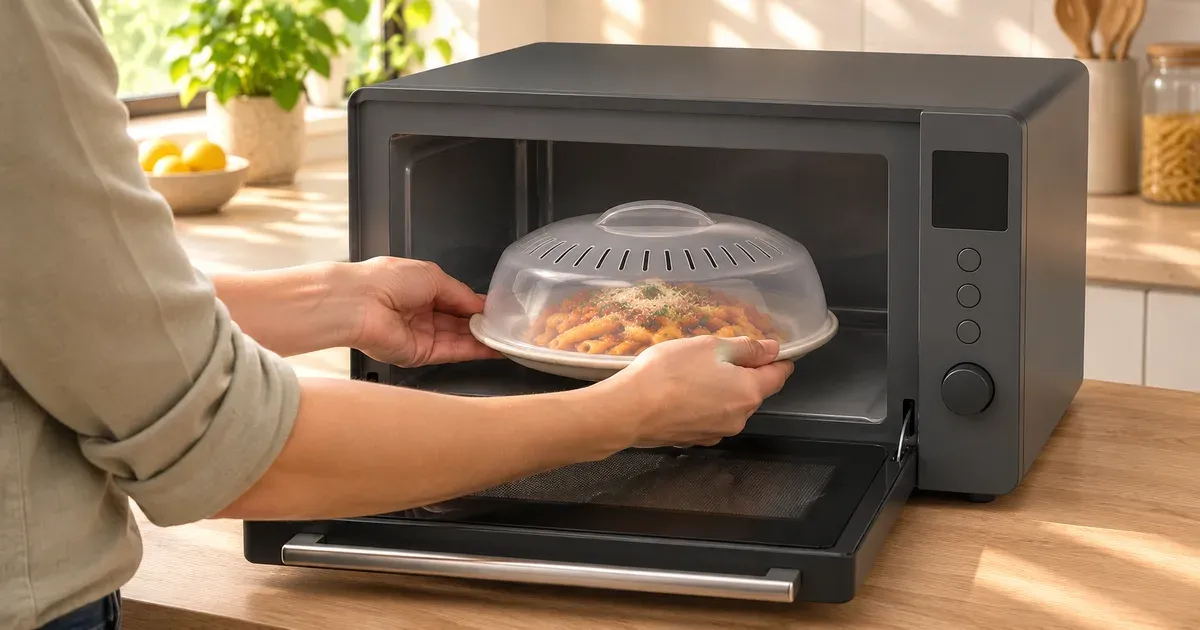
Either way, a sensor solves the biggest reheating problem: guessing the time. A plate of leftovers stops when it’s hot, not when the timer you guessed runs out.
What Throws a Sensor Off
From Panasonic’s and Toshiba’s manuals:
- Opening the door early. Don’t open the door until the sensor has detected steam and the remaining time appears. Toshiba lists this as a cause of poorly cooked sensor food.
- Sealed containers. Cover with a vented lid or vented plastic wrap. A tight seal traps steam and can make food overcook.
- Leftover moisture. Panasonic says the containers and the oven interior should be dry, because water droplets turning to steam “can mislead the sensor.”
- Tiny portions. Panasonic’s Genius sensor needs more than 4 ounces of food.
- A hot kitchen. Panasonic says the room around the oven should be below 95°F.
Best Overall: Panasonic NN-SN67QS
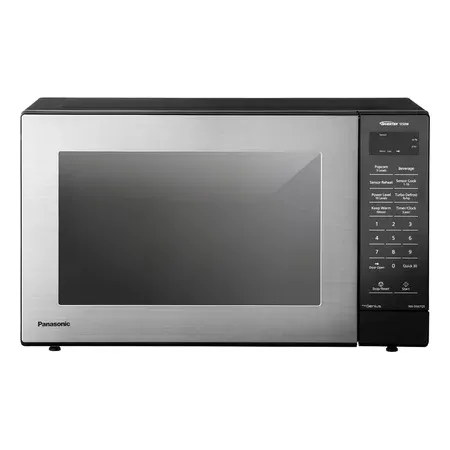
Best sensor microwave
Panasonic NN-SN67QS
Genius steam sensor for Sensor Reheat and Sensor Cook with More/Less adjustment, plus a 1,250 W inverter.
The Panasonic NN-SN67QS gives you the most control over sensor results. The manual describes a Sensor Reheat pad and a numbered Sensor Cook menu, and after a few uses you can press Keep Warm (More) to add 20% to the sensor’s time or Timer/Clock (Less) to subtract time if food comes out hotter or cooler than you like. That adjustment is what makes a sensor useful long term.
It pairs the sensor with Panasonic’s inverter, 1,250 watts and 1.2 cubic feet, for $199.95 on Amazon.
Best Premium Sensor: Panasonic NN-SF57RM
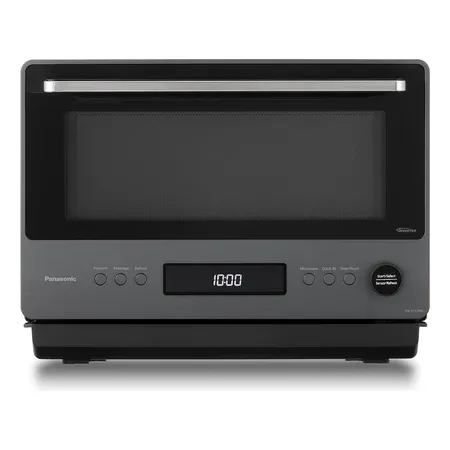
Best premium sensor
Panasonic NN-SF57RM
Infrared sensor for one-touch Sensor Reheat, dial control, flatbed floor and a pull-down soft-close door.
The Panasonic NN-SF57RM is Panasonic’s “Genius Sensor 2.0” model. Its manual shows an IR sensor in the cavity and a Sensor Reheat mode chosen with a single dial, plus Keep Warm and More/Less settings. It’s a 1.0-cubic-foot, 1,200-watt flatbed with a pull-down, soft-close door. For sensor programs, the manual says to put food in the center of the cavity. It was $350.95 on Amazon.
Best Value: Toshiba EM131A5C
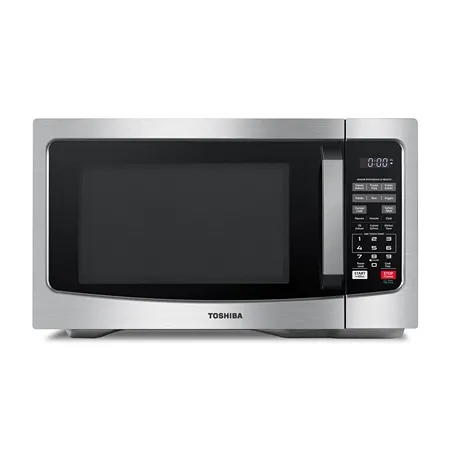
Best value sensor
Toshiba EM131A5C
Humidity sensor with six one-touch programs: reheat, frozen pizza, frozen entrée, potato, rice and veggie.
The Toshiba EM131A5C is the cheapest good sensor microwave. Its Sensor Menu has six one-touch programs: sensor reheat, frozen pizza, frozen entrée, potato, rice and vegetables. It’s 1.2 cubic feet with 1,100 watts output per the manual and no inverter, for $119.99 on Amazon.
Best Premium Dial Model: Breville Smooth Wave
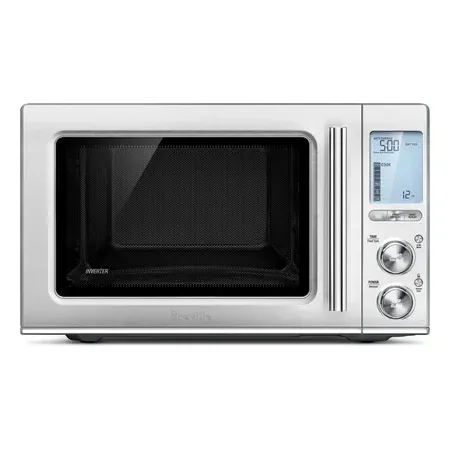
Best premium dial model
Breville Smooth Wave BMO850
Sensor iQ adjusts power to reheat and cook, with 15 smart presets, two dials and an inverter.
Breville says the Smooth Wave’s Sensor iQ adjusts power automatically to reheat and cook, and you pick programs with two dials instead of a keypad. It’s 1.2 cubic feet and 1,200 watts with an inverter, for $399.95 from Breville.
Best Larger Sensor Models: GE and Sharp
For 1.6 cubic feet with a sensor and no inverter, the GE GCST16S1WSS is 1,150 watts with a 13.625-inch turntable for $179, and the Sharp SMC1662KS is 1,100 watts with a 13.6-inch turntable and a five-year magnetron part warranty for $198.97.
FAQ
What is the best microwave with sensor cooking?
The Panasonic NN-SN67QS: a Genius steam sensor for reheating and a sensor cook menu you can adjust 20% up or down, plus an inverter, for $199.95 on Amazon on November 19, 2026.
What does sensor cooking do on a microwave?
It measures the steam or humidity food releases (or, on some newer models, its temperature with an infrared sensor) and sets the cooking time automatically, so you don’t have to guess how long to heat leftovers or vegetables.
Why did my sensor reheat come out cold?
The most common causes are opening the door before the sensor detected steam, sealing the container so steam couldn’t reach the sensor, or heating a very small portion. Panasonic’s sensor needs more than 4 ounces of food, and both Panasonic and Toshiba say to vent the cover.
Is sensor cooking worth it?
Yes, if you reheat leftovers often. It’s available for about $120 on the Toshiba EM131A5C, and it removes most of the guesswork that leads to cold centers or dried-out edges.