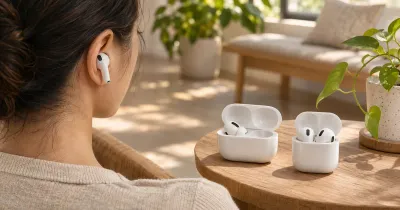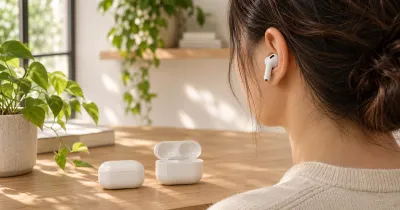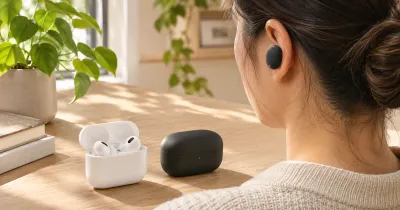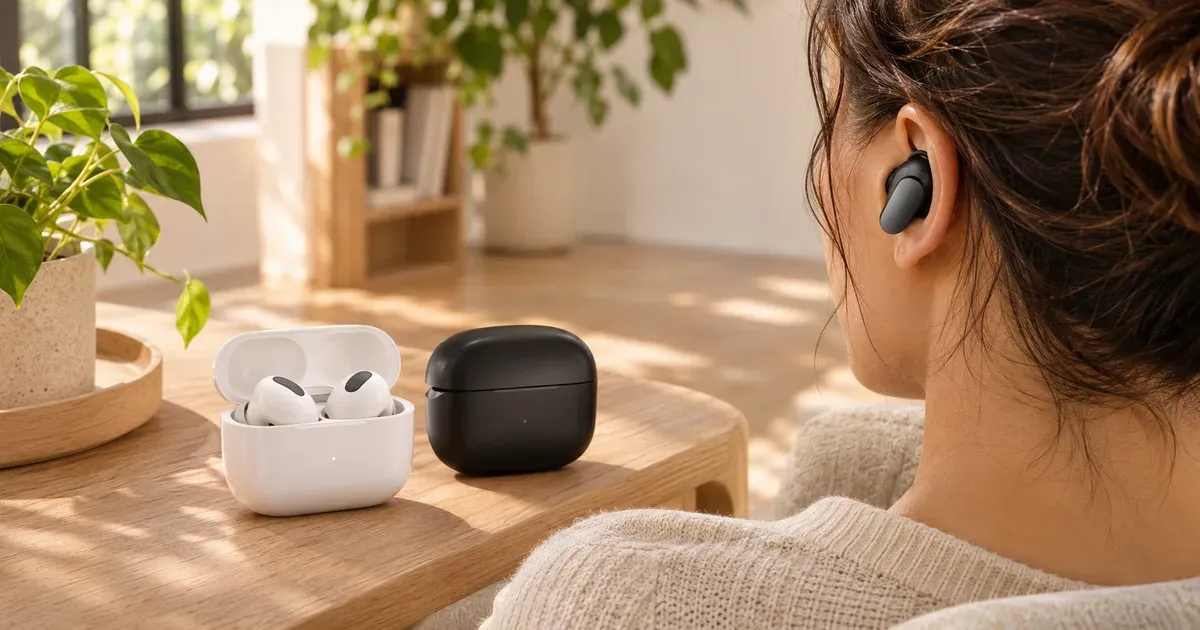
For iPhone owners, the AirPods Pro 3 is the better buy: $149 on Amazon on November 23, 2026, with 8 hours per charge, IP57, heart-rate sensing and Apple’s Hearing Aid feature. Get the Bose QuietComfort Ultra Earbuds (2nd Gen), $229 on Amazon and bose.com (list $299), if you use Android, want aptX Adaptive and multipoint, or need stability bands to keep earbuds in. The Bose runs 6 hours per charge (4 with Immersive Audio on) and is rated IPX4. The Bose is $80 more today.
Side by Side
| AirPods Pro 3 | Bose QC Ultra Earbuds (2nd Gen) | |
|---|---|---|
| Price on Nov 23, 2026 | $149 Amazon; $249 Apple | $229 Amazon and bose.com (list $299) |
| Released | September 2025 | June 2025 |
| Battery, buds (ANC on) | 8 h | 6 h (4 h with Immersive Audio) |
| Battery with case | 24 h | Case adds 3 full charges |
| Quick charge | 5 min ≈ 1 h | 20 min = 2 h |
| Water rating | IP57, buds and case | IPX4 |
| Weight per bud | 5.55 g | About 7 g (0.016 lb) |
| Case weight | 43.99 g | About 60 g (0.132 lb) |
| Fit | Tips in 5 sizes (XXS–L) | S/M/L tips plus stability bands 1–3 |
| Codecs | Not listed by Apple | SBC, AAC, aptX Adaptive (Snapdragon Sound phones) |
| Multipoint | Not listed by Apple | Yes, 2 devices |
| Wireless charging | MagSafe, Qi, Apple Watch charger | Yes, wireless charging case |
| Heart rate | Yes | No |
| Hearing Aid / Hearing Test | Yes | No |
| Spatial audio | Personalized Spatial Audio, head tracking | Immersive Audio with head tracking |
The Differences That Matter
Battery. The Pro 3 runs 8 hours per charge with noise cancelling, the Bose 6, and the Bose drops to 4 hours with Immersive Audio on. The Pro 3’s case brings it to 24 hours; Bose says its case adds three full charges.
Fit. Bose pairs its tips with soft stability bands that brace against the ridge of the ear, in three sizes in the box (sizes 0 and 4, plus XS and XL tips, are sold separately). Apple instead offers five tip sizes, down to XXS. If earbuds tend to fall out of your ears, the Bose bands are the bigger help.
Android and codecs. The Bose works fully on Android through the Bose app, supports aptX Adaptive on Snapdragon Sound phones, and connects to two devices at once. On Android, Apple says AirPods work only as a basic Bluetooth headset.
Water and sweat. IP57 on the Pro 3 vs. IPX4 on the Bose. The Pro 3 is the safer pick for heavy sweat or rain.
Extras. The Pro 3 adds heart-rate tracking in workouts and Apple’s Hearing Test, Hearing Aid and Hearing Protection. The Bose adds CustomTune calibration, ActiveSense in Aware mode, Cinema Mode, eight microphones for calls and wax guards.
Prices on November 23, 2026
- AirPods Pro 3: $149 on Amazon, sold by Amazon.com (list $249). Apple charges $249, with a $50 gift card from November 27 to 30.
- Bose QC Ultra Earbuds (2nd Gen): $229 on Amazon, sold by Amazon.com, matching bose.com’s $229 sale price, which Bose says runs through January 3, 2027.
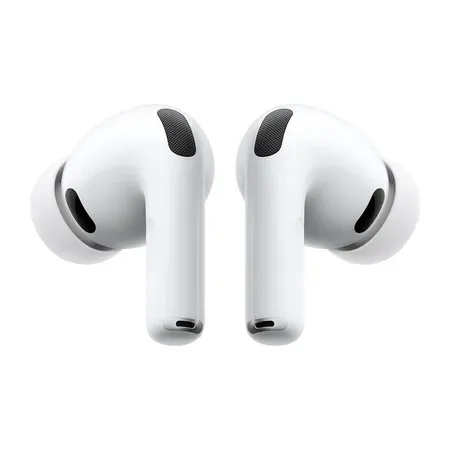
Best for iPhone
Apple AirPods Pro 3
8 hours with ANC, IP57, heart-rate sensing and Hearing Aid. $149 on Amazon on Nov 23, 2026.
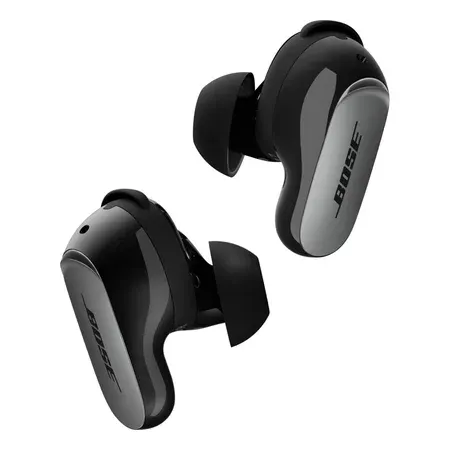
Best for android and secure fit
Bose QuietComfort Ultra Earbuds (2nd Gen)
Stability bands, aptX Adaptive, multipoint and a wireless charging case. $229 on Amazon.
Which Should You Buy?
- AirPods Pro 3: iPhone owners, runners and gym-goers who want IP57 and heart rate, and anyone who wants the longest battery for less money.
- Bose QC Ultra Earbuds (2nd Gen): Android owners, people who switch between a phone and a laptop, and anyone whose earbuds won’t stay put with tips alone.
Comparing the Bose with Sony instead? See Bose QuietComfort Ultra Earbuds vs. Sony WF-1000XM6 and are Bose QuietComfort Ultra Earbuds worth it.
AirPods Pro 3 vs. Bose QC Ultra Earbuds FAQ
Which has better battery life?
The AirPods Pro 3: 8 hours per charge with noise cancelling, vs. 6 hours on the Bose (4 with Immersive Audio).
Do the Bose QC Ultra Earbuds work with iPhone?
Yes, with the Bose app, using AAC. aptX Adaptive needs an Android phone with Snapdragon Sound.
Is the Bose QC Ultra Earbuds (2nd Gen) case wireless?
Yes. The 2nd Gen added a wireless charging case; Bose doesn’t include a charger.
Which is more water resistant?
The AirPods Pro 3, rated IP57 for buds and case. The Bose is rated IPX4.